

 Current position > News detail
『Compressed gas flowmeter』Related information(clamp on meter|electromagnetic meter|venturi meterrotameter|orifice meter|ultrasonic flow meter|mass flow meter|coriolis mass flow meter|coriolis flow meter|magnetic flow meter|magmeter flow meter|magflow flow meter|mag meter flow meter|electromagnetic flow meter|vortex flow meter|turbine flow meter|thermal mass flow meter|thermal flow meter|rotameter flow meter)
1. What kind of flowmeter is good for measuring compressed air? There are various instruments that can be used to measure air, but there are not many types of air flow meters actually used on site according to their working principles. The most important ones are rotor flow meters, throttling differential pressure flow meters, vortex flow meters, and averaging tube flow meters.
1、 When measuring compressed air, flow meters are usually installed in the compressor room and blower room. However, vibrations generated by compressors or blowers can be transmitted to distant vibrations through air ducts or ducts. This vibration can cause the vortex flow sensor to generate interference signals corresponding to the vibration frequency, disrupting the cavity mode and resulting in significantly higher and slower flow readings.
2、 Compressed air is taken from the atmosphere, which always contains water vapor. For orifice flow meters that measure the flow rate of compressed air with larger diameters, there is often water accumulation in front of the orifice plate, which can affect the measurement accuracy. In addition, there is often a section of water accumulation in the pressure pipe, which causes the differential pressure measured by the differential pressure transmitter to be inconsistent with the differential pressure generated by the throttling device. This is also one of the reasons for errors caused by air carrying water.
3、 The fluid at the outlet of compressors and blowers often contains certain pulsations. Pulsating fluid can cause high readings in various flow meters such as differential pressure flow meters and vortex flow meters, and even cause the rotor in the rotor flow meter to jump up and do
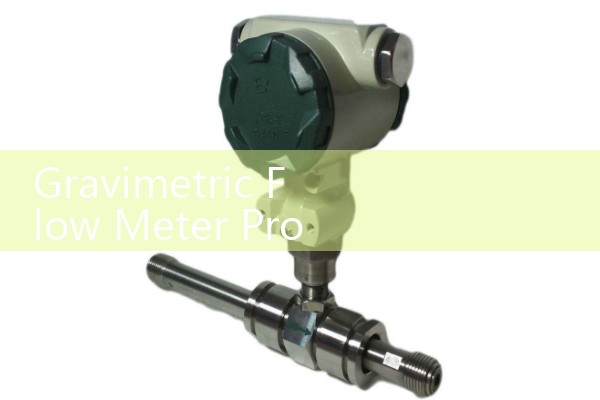
4、 The averaging tube flowmeter has unique advantages in measuring large turbulent aperture air flow. It is inexpensive, structurally simple, highly reliable, and easy to install and maintain, making it a good supplement to vortex flowmeters and throttling differential pressure flowmeters.
2. What parameters can be monitored by a compressed air flowmeter
The compressed air flowmeter can monitor the following core parameters
1. Basic flow parameters • Instantaneous flow: Real time monitoring of the flow rate of compressed air in the pipeline (unit: m ³/min or Nm ³/h) • Cumulative flow: Record the total amount of gas passing through the pipeline during a specific time period (unit: m ³ or Nm ³) • Mass flow: Some models can directly measure gas mass (unit: kg/h) 2. Operating condition parameters • Pressure value: Synchronized detection of gas pressure in the pipeline (usually 0-1.6 MPa) • Temperature value: Real time monitoring of gas temperature (typical range: -20 ℃~+80 ℃) • Dew point temperature: High end models can output compressed air humidity parameters 3 Energy efficiency parameters • Flow rate: displays the gas flow velocity inside the pipeline (unit: m/s) • Compression ratio: calculated from pressure data • Leakage rate: detects system leakage through flow mutation analysis Advanced functional parameters (specific model support required) • Density compensation: automatically corrects flow data affected by temp