

 Current position > News detail
『Flow Meter Fire Protection Approval: NFPA-Compliant Inline Testing Sensors for Buildings』Related information(clamp on meter|electromagnetic meter|venturi meterrotameter|orifice meter|ultrasonic flow meter|mass flow meter|coriolis mass flow meter|coriolis flow meter|magnetic flow meter|magmeter flow meter|magflow flow meter|mag meter flow meter|electromagnetic flow meter|vortex flow meter|turbine flow meter|thermal mass flow meter|thermal flow meter|rotameter flow meter)
Flow Meter Fire Protection Approval: NFPA-Compliant Inline Testing Sensors for Buildings
Quick Answer: NFPA 25 and NFPA 20 do not issue product approvals for individual flow meters. Building teams need an inline flow meter with valid calibration, 4-20 mA HART, pulse output, and a local totalizer to meet fire protection test records. Silver Instruments supplies electromagnetic inline sensors from DN15 to DN600 for fire pump tests, zone balancing, and main drain testing.
What NFPA 25 and NFPA 20 Actually Require
Here is the thing. NFPA is not a product listing body. The standard tells you how to test and what to record. NFPA 25 sets rules for periodic fire pump flow tests and main drain tests. NFPA 20 covers fire pump performance. Your inline flow sensor must be accurate and repeatable. It must be installed where the pipe stays full and the flow profile is stable.
Local authorities may ask for a UL listed or FM approved device. Others accept an ISO 17025 calibration report. We have seen this on a 200 mm fire pump test header in a Ho Chi Minh City commercial tower. The consultant required a calibration report and a pulse output for the building management system.
Which Inline Flow Meter Type Fits Fire Protection Systems
Electromagnetic flow meters are the most practical inline option for water based fire protection. They have no moving parts. They do not block the pipe. They work with water conductivity above 5 µS/cm. Most city water, bore water, and seawater for fire mains meet this level. Ultrasonic inline meters also work when you cannot cut the pipe.
Oval gear meters can jam on sediment or pipe scale. Coriolis meters are accurate but too costly for a building fire riser. Thermal mass meters fit air and nitrogen testing, not water flow. For an 80 mm fire main drain line or a 150 mm pump test header, select an electromagnetic inline meter.
Inline Testing Sensor Specs That Matter
Start with pipe diameter and flow range. A fire pump test header can flow from 200 to 5000 liters per minute depending on pump size. For a DN100 riser, a meter range of 0 to 300 m³/h is often enough. For a DN200 header, select a range up to 800 m³/h. Use hard rubber or PTFE liners and 316L stainless steel electrodes. A wafer type process connection fits between flanges.
Signal output is where many projects fail. Order the meter with 4-20 mA HART plus a pulse output for total flow. The pulse output gives total flow volume for the fire pump test record. A local display helps the technician during a monthly test. If the meter is in a wet pit or underground vault, specify an IP68 remote sensor with a wall mount converter. In a diesel fire pump room, check the area classification. You may need an ATEX Zone 2 rated converter depending on fuel storage and local ventilation codes.
Temperature rating is usually 0 to 70 °C for the liner and electronics. Pressure rating is typically PN16 or PN40 depending on building height and pump discharge pressure. We quote PN40 for high rise buildings in the Middle East and Southeast Asia where static pressure can exceed 16 bar. Send us your pipe size (DN), pressure (bar), temperature (°C), and flow range.
Why a Totalizer and Data Logging Matter
NFPA 25 test records are not about instantaneous flow only. Inspectors want total flow volume during a pump test. A built in non resettable totalizer solves this. You can add a paperless recorder for standalone data logging. This helps facilities in Jakarta or Lagos where a building management system may not cover every fire riser.
In practice, a paperless recorder with USB export makes the annual inspection faster. The auditor sees a trend line, a total volume, and a time stamp. You avoid hand written logs that get lost. We supply panel mount paperless recorders that accept 4-20 mA from multiple flow meters and p
Installation Tips for Building Fire Mains
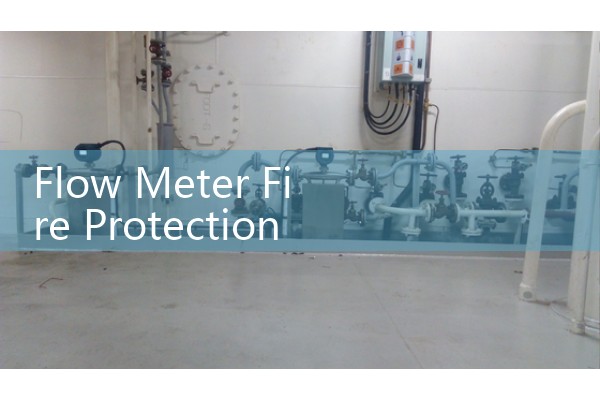
Install the electromagnetic flow meter in a pipe section that stays full of water. Avoid the highest point where air pockets collect. Keep at least 5 DN straight pipe upstream and 2 DN downstream. For a DN150 meter, that is 750 mm straight run before the sensor and 300 mm after it. Do not install the meter directly after a partially open butterfly valve or a check valve.
For a fire pump test header, place the inline sensor downstream of the flow test valve. The meter should see the same flow that passes through the test header. For a main drain test on a sprinkler riser, place the meter on the main drain line. Use a separate valve downstream to control flow. The meter itself must not be used as the throttling device.
Recommended Silver Instruments Packages
For building fire pump test headers, we recommend an electromagnetic inline flow meter with DN50 to DN300 size, hard rubber liner, 316L stainless steel electrodes, 4-20 mA HART, pulse output, and a local display. For main drain tests on sprinkler risers, a DN25 to DN50 meter is usually enough. For zone flow verification in large commercial buildings, use DN80 to DN150 meters with a remote converter if the pipe runs through a crowded ceiling void.
A facilities contractor in the Philippines recently ordered six DN100 electromagnetic meters for a 32 story office tower. They installed one meter on each floor zone riser and one on the main fire pump discharge. The pulse outputs went to the building management system. The local displays gave the maintenance crew a direct reading during the quarterly test. The package shipped with calibration reports and flange gaskets.
Frequently Asked Questions
Does NFPA approve flow meters for fire protection?
No. NFPA develops installation and testing standards. It does not issue product approvals. Your meter may need to be UL listed or FM approved depending on the local fire marshal. Ask the local authority first. Silver Instruments can provide factory calibration documents and material certificates.
Which inline flow meter works best for fire pump testing?
An electromagnetic inline flow meter is the best fit for water based fire pump testing. It handles sediment, has no moving parts, and gives stable readings over a wide flow range. For DN50 to DN300 fire pump headers, specify hard rubber liner and 316L stainless steel electrodes.
What output signals are needed for NFPA 25 test reports?
Use 4-20 mA HART for flow rate and a pulse output for total flow volume. A local display helps field staff. If you need standalone records, add a paperless recorder with time stamped data export.
Can I install an electromagnetic flow meter on a fire main drain line?
Yes. A DN25 to DN50 electromagnetic meter works on a sprinkler main drain line. Install it on the vertical or horizontal drain pipe where the pipe stays full during the test. Keep a straight run upstream and downstream as specified by the manufacturer.
What pipe size range do Silver Instruments inline fire flow meters cover?
We supply electromagnetic inline flow meters from DN15 to DN600. For building fire protection, DN25 for branch drains, DN80 to DN150 for zone risers, and DN200 to DN300 for fire pump discharges are common.
Get a Quote for Fire Protection Flow Meters
Send us your pipe size (DN), pressure (bar), temperature (°C), and flow range. Tell us if you need pulse output, 4-20 mA HART, IP68 remote sensor, or a paperless recorder. We will quote a Silver Instruments inline flow meter for your fire pump test header or sprinkler main drain line.
Contact Silver Automation Instruments. Tel: +86-25-68650347. Whatsapp: +86-25-52155837. WeChat: +86 15365082610. For product specifications, visit flow-meter.com.au.