

 Current position > News detail
『Open Channel Flow Meter: Area Velocity Wastewater Systems』Related information(clamp on meter|electromagnetic meter|venturi meterrotameter|orifice meter|ultrasonic flow meter|mass flow meter|coriolis mass flow meter|coriolis flow meter|magnetic flow meter|magmeter flow meter|magflow flow meter|mag meter flow meter|electromagnetic flow meter|vortex flow meter|turbine flow meter|thermal mass flow meter|thermal flow meter|rotameter flow meter)
Open Channel Flow Meter: Area Velocity Wastewater Systems
Quick Answer: An area velocity flow meter measures flow in open channels and partially full pipes by multiplying the flow cross‑sectional area by the average velocity. Silver Instruments supplies the AVFM‑1000 series for wastewater plants that handle raw sewage, effluent, and stormwater. This meter works when pipes run 0 to 100 percent full and delivers stable readings even at velocities as low as 0.03 m/s.
When You Need an Area Velocity Meter in Wastewater
A typical electromagnetic or ultrasonic transit‑time meter assumes a full pipe. That assumption fails the moment your plant runs a 900 mm concrete drain at 40 percent fill. Many industrial and municipal sites in Southeast Asia, the Middle East, and Latin America face exactly this. Here is the thing. If you force a full‑pipe meter into a surcharged or open channel, you get numbers that look okay on the PLC but drift by 20 percent or more during low night flows. An area velocity meter solves this by measuring two variables in real time: liquid level and stream velocity. The transmitter multiplies them to give you flow rate in m³/h or litres per second, no guesswork.
How the AVFM‑1000 Works on Site
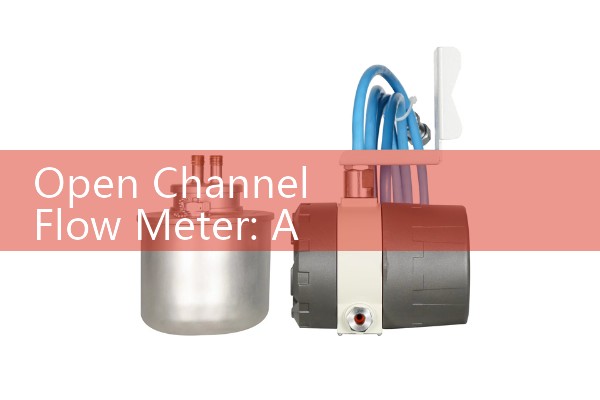
The Silver Instruments AVFM‑1000 uses a submersible velocity sensor paired with an ultrasonic or pressure level sensor. The velocity sensor is a doppler‑based transducer that fires a 1 MHz signal into the water. Suspended solids or air bubbles reflect that signal back. The electronics calculate velocity from the frequency shift, typically across a range of 0.03 m/s to 6.0 m/s. The level sensor, mounted at the channel bottom or on a bracket above the water, sends a 4‑20 mA signal proportional to head. The transmitter runs the continuity equation Q = v × A every 500 ms. A 4‑20 mA HART output goes straight to your SCADA or RTU, and the RS485 Modbus port lets you pull data logs for compliance reporting.
Why Wastewater Plants Switch to Area Velocity
Most plants in Vietnam, Indonesia, Nigeria, and Chile deal with varying hydraulic loads. A single 1200 mm rectangular channel may see peak flows of 3500 m³/h during a storm and drop to 200 m³/h at 3 AM. Because the AVFM‑1000 measures real level, it tracks that swing without a flume or weir. No parshall flume means no upstream silt buildup, no frequent cleaning, and no civil works to modify the channel. In practice, maintenance teams skip the flume scraping step entirely. They simply pull the velocity sensor every six months, wipe the transducer face, and put it back. Accuracy stays within ±1 percent of reading for velocities above 0.1 m/s, and within ±0.01 m/s for lower flows.
Real Site Detail: a Paint Manufacturer in Southeast Asia
Last year a coatings factory near Rayong, Thailand, asked us to replace a failing flume system. Their 450 mm concrete drain carried latex‑laden wastewater with pH ranging from 4.5 to 10. Previous magnetic sensors clogged within weeks. We proposed an AVFM‑1000 with a titanium velocity sensor and an ultrasonic level unit fixed to a stainless‑steel mounting arm. The meter now sends flow totals directly to the plant
How to Size and Configure Your Meter
Start with the channel shape. The AVFM‑1000 supports rectangular, trapezoidal, circular, and egg‑shaped profiles. You enter the dimensions during setup. Pipe sizes range from DN200 up to DN3000, and larger custom spans are available. Specify your expected minimum and maximum flow rates. In a typical municipal sewage line, the minimum may be 50 m³/h at night and the peak 1200 m³/h after a rainfall event. Power is 24 V DC, and you can order an integral IP68 enclosure for submersion. For hazardous areas, we supply ATEX Zone 2 transmitters with Ex nA protection. So, when you email us, include your pipe or channel width in mm, the liquid type, the pH range, and the solids content. Send those details to [email protected] and we will send a datasheet the same working day.
Outputs That Fit Your Control System
The transmitter gives you one 4‑20 mA loop for flow and a second 4‑20 mA loop for level. Both loops are HART 7 compatible. Modbus RTU runs over RS485, and you can set baud rates from 2400 to 115200. Many SCADA programmers prefer Modbus because they can read instantaneous velocity, flow, and totalizer values in a single register block. If you still use pulse outputs for batch control, we can add an open‑collector pulse channel. Typical pulse weight is 10 litres per pulse, and you adjust it via the on‑screen menu.
Frequently Asked Questions
What is the minimum velocity the area velocity sensor can detect? The doppler sensor reads down to 0.03 m/s. Below that, the electronics hold the last valid value to avoid noise. You can set a low‑flow cutoff in the transmitter menu.
Can this meter work in channels with heavy sediment? Yes. Install the velocity sensor above the sediment bed using a bracket. The ultrasonic level sensor measures the water surface, so a few centimetres of sludge at the bottom do not affect the level reading.
What is the typical accuracy for an area velocity open channel flow meter? ±1 percent of reading for velocities above 0.1 m/s, and ±0.01 m/s between 0.03 and 0.1 m/s. Level accuracy is ±0.25 percent of span.
How do we calibrate the AVFM‑1000 on site? You enter the channel geometry via the keypad or Modbus. The velocity sensor is factory‑calibrated and does not need field calibration. We recommend a zero check with static water once a year.
What support does Silver Instruments provide for overseas projects? We ship to more than 90 countries. Our application engineers review your channel dimensions, liquid data, and cable length requirements before you order. You reach us at [email protected], by phone at +86-25-68650347, or on WhatsApp at +86-25-52155837.
For a firm quote, send your channel details and flow range to [email protected]. You can also call +86-25-68650347 or message us on WhatsApp at +86-25-52155837. WeChat users reach us at +86 15365082610.