

 Current position > Product detail
『Wedge Meter Flow Measurement: Differential Pressure Slurry Element Sizing』Related information(clamp on meter|electromagnetic meter|venturi meterrotameter|orifice meter|ultrasonic flow meter|mass flow meter|coriolis mass flow meter|coriolis flow meter|magnetic flow meter|magmeter flow meter|magflow flow meter|mag meter flow meter|electromagnetic flow meter|vortex flow meter|turbine flow meter|thermal mass flow meter|thermal flow meter|rotameter flow meter)
Wedge Meter Flow Measurement: Differential Pressure Slurry Element Sizing
Quick Answer: A wedge meter creates differential pressure through a V shaped restriction. It handles slurries and dirty liquids because the open wedge shape does not collect solids. Silver Instruments supplies wedge flow elements from DN25 to DN300 and can size the meter for your exact slurry flow.
What a Wedge Meter Does in Slurry Service
A wedge flow meter is a differential pressure primary element. The wedge sits at the top or bottom of the pipe and forms a restriction. Flow moves around the wedge and creates a high pressure zone upstream and a low pressure zone downstream. A DP transmitter reads this pressure difference and converts it to flow. The wedge shape has a slanted face. Solids in the slurry slide past the wedge instead of piling up.
We have seen this on customer sites many times. An orifice plate in a 20 percent kaolin slurry will block within days. A wedge element with a wide gap can run for months before cleaning. The open geometry is the whole point. No small holes. No impulse line taps that plug.
How Differential Pressure Slurry Element Sizing Works
Sizing a wedge meter is not the same as sizing an orifice plate. The key variable is the wedge ratio. This is the open height under the wedge divided by the pipe inside diameter. For clean water, a wedge ratio of 0.3 to 0.5 is common. For thick slurry with solids over 10 percent, we open the wedge ratio to 0.5 to 0.7. That keeps the slurry moving and reduces wear.
The flow equation follows Q equals K times square root of DP. The K factor comes from the pipe ID, wedge ratio, and calibration data. Silver Instruments calculates the K factor for each application. We ask for minimum and maximum flow, normal flow, pipe schedule, solids content, particle size, viscosity, pressure, and temperature. If you give only line size, the meter may be wrong. Most engineers skip this part, then wonder why the DP signal is noisy.
Slurry Applications Where Wedge Meters Fit
Wedge meters work well in mining, dredging, paper stock, lime slurries, fly ash, and wastewater sludge. A coal mine in Indonesia used a DN150 wedge meter on magnetite slurry. The solids content was 30 percent by weight. The meter ran for six months without plugging. A paint manufacturer in Southeast Asia used a DN50 wedge meter on titanium dioxide slurry. The remote seal transmitter was mounted above the pipe with capillary tubes to avoid clogged impulse lines.
Other good services include raw sewage, anaerobic digester feed, ash slurry, and starch slurry. For clean water or low solids water, an electromagnetic flow meter can be cheaper. For slurry with solids over 1 percent, wedge meters earn their cost in reduced maintenance. The wedge element can handle particles up to 25 percent of the open gap size. We specify the gap to suit the largest particle you expect.
Wedge vs Orifice Plate and Venturi in Slurry Flow
An orifice plate has a thin sharp edge. Solids wear that edge quickly and the calibration shifts. A venturi has a smooth throat but long straight run requirements and large size. A wedge meter sits in a short body and often needs only 10 to 15 diameters upstream and 5 diameters downstream. It is not a universal flow meter. But for slurry, sludge, and low Reynolds number flows, it is a practical choice.
Here is the thing. Wedge meters also work at low Reynolds numbers where orifice plates lose accuracy. This matters for thick polymer solutions, heavy oil, or cold bitumen where flow is laminar. The wedge creates a more stable DP signal in these regimes. That is why many refinery and chemical plant engineers specify wedge elements for difficult fluids.
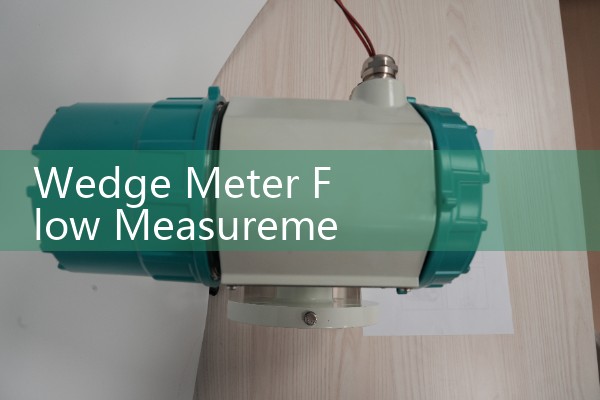
Silver Instruments Wedge Meter Specifications
Silver Automation Instruments builds wedge flow elements in 316L stainless steel, Hastelloy C, and carbon steel with PTFE coating on request. Standard line sizes are DN25 to DN300. Larger sizes from DN350 to DN600 are available on request. Process connections can be wafer style or flanged. Pressure ratings are PN16, PN40, ANSI 150, and ANSI 300 as standard. Higher ratings are possible.
We pair the wedge element with a differential pressure transmitter that outputs 4 to 20 mA HART. For slurry service we recommend remote diaphragm seals. Flush seals prevent solids from entering the transmitter and impulse lines. The electronics can be ATEX Zone 1 or Zone 2 certified. Accuracy is typically 0.5 percent of actual flow after calibration for Reynolds numbers above 500. Temperature range is -40 to 200 °C for standard seals.
Installation and Maintenance Notes
Install the wedge element in a straight pipe run. Ten to fifteen pipe diameters upstream is enough for most installations. Five diameters downstream is usually fine. If you have a control valve or a partially closed valve upstream, increase the straight run to twenty diameters. Mount the DP transmitter below the pipe for clean liquids. For slurry, mount the transmitter above the pipe with remote seals and capillary.
Cleaning a wedge meter is simple. Shut down the line, remove the element, and wash the wedge face. No small ports to poke. If the slurry is highly abrasive, inspect the wedge face every six months. We have seen ceramic coated wedges last twice as long in iron ore slurry. Silver Instruments can include a ceramic or tungsten carbide coating for severe wear.
Sizing Request Checklist
To get a price quote and a sizing sheet, send us these details. Flow range in m3/h or kg/h. Pressure in bar. Temperature in Celsius. Pipe size in DN. Pipe schedule or wall thickness. Slurry type and solids content by weight. Largest particle size in millimeters. Viscosity in centipoise if you have it. Output signal preference such as 4 to 20 mA HART or Modbus. Hazardous area class if any.
Send this data to Silver Instruments by phone or WhatsApp. Tel: +86-135-1213-1526. WhatsApp: 86-135-12131526. WeChat: +86 13512131526. We normally return a sizing sheet within two working days. If your flow range is wide, we may recommend two wedge meters in parallel or a smart transmitter with span switching.
FAQ on Wedge Meter Flow Measurement
Q1: What is a wedge meter used for? It measures differential pressure in slurries, dirty liquids, sludge, and gases. It is common in mining, wastewater, paper stock, and heavy oil.
Q2: How do I size a wedge flow element? Send flow range, pressure, temperature, pipe size, slurry type, solids content, and particle size. Silver Instruments calculates the wedge ratio and K factor.
Q3: Can a wedge meter handle abrasive slurry? Yes. Use 316L or Hastelloy C body with PTFE or ceramic coating. Remote seals protect the transmitter. The open wedge shape resists plugging.
Q4: What is the accuracy of a wedge flow meter? Typical accuracy is 0.5 percent of actual flow after calibration. It depends on flow range, Reynolds number, and transmitter stability. For slurries with changing solids, expect 1 percent of rate in the field.
Q5: What is the difference between a wedge meter and an orifice plate? A wedge meter has no sharp edge. Solids pass around the wedge. An orifice plate has a thin edge that wears and plugs. Wedge meters work at lower Reynolds numbers too.
Send your slurry flow details to Silver Instruments. We will provide a differential pressure wedge element sizing and price quote for your application.