

 Current position > Product detail
『Solids Flow Meter: Gravimetric Impact Chute Systems for Bulk Powders』Related information(clamp on meter|electromagnetic meter|venturi meterrotameter|orifice meter|ultrasonic flow meter|mass flow meter|coriolis mass flow meter|coriolis flow meter|magnetic flow meter|magmeter flow meter|magflow flow meter|mag meter flow meter|electromagnetic flow meter|vortex flow meter|turbine flow meter|thermal mass flow meter|thermal flow meter|rotameter flow meter)
Solids Flow Meter: Gravimetric Impact Chute Systems for Bulk Powders
Quick Answer
A gravimetric impact chute flow meter measures dry bulk powder by directing material onto an impact plate. The load cell signal converts to mass flow in t/h or kg/h. Silver Automation Instruments supplies these systems for cement, lime, fly ash, flour and plastic powder from 1 t/h to 300 t/h with 4-20 mA HART and RS485 Modbus outputs.
What a Gravimetric Impact Chute Flow Meter Does
The meter installs below a screw conveyor, rotary valve or small belt conveyor. Product falls through a chute and strikes a sensing plate. A load cell measures the impact force. The transmitter converts force, chute geometry and calibration data into a mass flow reading. But this is not a volumetric estimate. The reading changes with particle mass and velocity, so the result is a true mass flow measurement.
In practice, chute angle and material speed affect the signal. Silver Automation Instruments sizes the impact plate from your bulk density, particle size, moisture and feed rate. Most applications do not need a separate speed sensor because the feeding device controls product velocity.
Common Applications in Bulk Powder Plants
Dry mortar plants in Southeast Asia use these meters on cement and sand feed lines. Lime producers in Australia measure calcium oxide after the screen. Food plants in Vietnam use them for flour and starch into batch mixers. Fly ash, gypsum, PVC resin, carbon black and calcium carbonate also work well. We have seen a paint manufacturer in Thailand install a chute meter on resin powder because the volumetric screw feeder drifted as the hopper level changed.
The meter also fits continuous dosing and loss in weight replacement projects. Because the signal updates every second, the PLC can trim the screw feeder speed without manual sampling.
Key Specifications for Engineers
Common inlet sizes are DN100 to DN250. The measuring range depends on chute width and material properties. Silver Automation Instruments covers 1 t/h to 300 t/h for most dry bulk powders. Accuracy after on-site calibration is typical plus minus 0.5 percent of full scale. Repeatability is around plus minus 0.2 percent. Output options include 4-20 mA HART and RS485 Modbus RTU. Power is 24 V DC or 220 V AC. Housing is IP65. For combustible dust areas, the meter can be supplied with ATEX Zone 1 or Zone 21 certification.
Standard models handle material temperatures up to 150 °C. Particle size up to 25 mm is acceptable if the impact plate has a wear liner. Bulk density from 0.2 to 3.5 t/m3 works well. Lighter powders below 0.2 t/m3 often need a wider plate and a steeper chute. Most engineers skip this part until the material data sheet shows wear issues. We size the plate by your actual product, not a generic table.
Installation a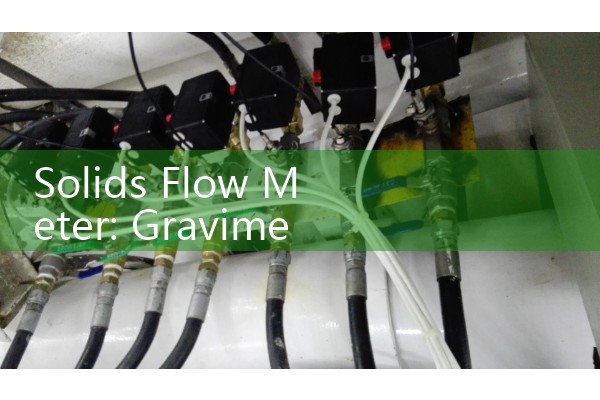
The meter needs a stable product fall height. The feeding device should give a consistent particle velocity. The inlet chute should be vertical and the product should not stick to the walls. A flexible connection below the meter reduces vibration.
Calibration uses the same material from your process. We run a known weight through the meter or compare the reading to a truck scale over a shift. The two point calibration corrects zero and span. If you change from fly ash to limestone, you may need a new calibration curve.
Customer Site Example
A dry mortar plant in Vietnam needed a flow meter for a 0 to 40 t/h sand line. The old volumetric screw feeder drifted when the hopper level changed. We supplied a gravimetric impact chute meter with a 4-20 mA HART output to the Siemens PLC. After calibration with two 500 kg test batches, the batch weight error stayed under 0.8 percent. The plant later ordered two more units for cement and fly ash.
Here is the thing. Most solid flow measurement problems are not about the sensor. They come from short chute runs, sticky powder or air pressure changes in pneumatic conveying. So we always ask for a site photo or a sketch of the chute.
FAQ
What bulk powders can this solids flow meter handle?
Cement, lime, fly ash, gypsum, sand, flour, starch, sugar, PVC resin, calcium carbonate and similar dry bulk powders work well. Sticky or very moist materials need a different sensing geometry.
What accuracy can I expect?
After on-site calibration, accuracy is typically plus minus 0.5 percent of full scale. For a 0 to 40 t/h range, that is plus minus 0.2 t/h. Repeatability is better than plus minus 0.2 percent.
Can this meter work in a dusty or ATEX area?
Yes. Standard housing is IP65. For combustible dust or gas zones, Silver Automation Instruments can supply ATEX Zone 1, Zone 21 or Zone 22 certification.
How do I get a quote for a specific powder?
Send your bulk density in kg/m3, maximum flow in t/h, particle size in mm, material temperature and chute dimensions. Also include the ambient temperature and hazardous area class. Our engineers will reply within 24 hours with a model selection and price.
What maintenance does this meter need?
The impact plate and load cell need inspection every 3 to 6 months. Clean dust buildup with dry compressed air. Check the zero point once a month. If the powder is abrasive, check the plate wear liner.
Contact Silver Automation Instruments
Send your bulk density, particle size, flow range and chute dimensions for a solids flow meter quote. For product data and drawings, contact Silver Automation Instruments or visit flow-meter.com.au.
Tel: +86-135-1213-1526
Whatsapp: 86-135-12131526
WeChat: +86 13512131526