

 Current position > Product detail
『Air Flow Meter Sensor Function: Physics of Heated Wire Heat Transfer Senses』Related information(clamp on meter|electromagnetic meter|venturi meterrotameter|orifice meter|ultrasonic flow meter|mass flow meter|coriolis mass flow meter|coriolis flow meter|magnetic flow meter|magmeter flow meter|magflow flow meter|mag meter flow meter|electromagnetic flow meter|vortex flow meter|turbine flow meter|thermal mass flow meter|thermal flow meter|rotameter flow meter)
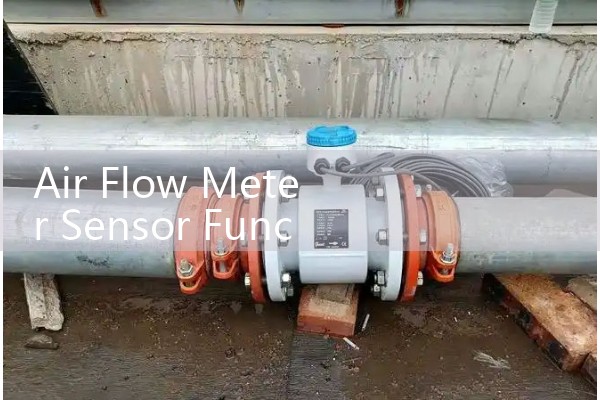
Air Flow Meter Sensor Function: Physics of Heated Wire Heat Transfer Senses
Quick Answer: A heated wire air flow sensor measures mass flow directly by sensing heat removal from a heated element. The moving gas cools the heated wire or film. That cooling effect is converted to a 4-20 mA HART signal. For a quote, send us your pipe size in DN, gas type, pressure in bar, temperature in °C, and flow range in kg/h.
What the Heated Wire Sensor Actually Senses
The sensor does not measure speed first. It senses heat removal. A heated wire or film sits in the gas stream. A second sensor measures gas temperature. As air flows across the heated element, the moving gas removes heat. The electronics then adjust heating power to keep a constant temperature difference. That power corresponds to the mass flow rate. This is forced convection heat transfer in action.
In practice, the sensor uses two platinum RTD elements. One is the heated sensor. One is the reference sensor. Many models use PT100 class elements. For a DN15 thermal mass flow meter, the sensor probe fits directly into the pipe. The same working principle scales up to DN300 and larger with insertion probes.
Why This Function Works for Industrial Air and Gas
The heated wire method gives a direct mass flow signal. It does not need a separate pressure transmitter. It does not need a separate temperature transmitter. That matters in compressed air lines. A customer in Vietnam asked us last year about a compressed air meter at 7 bar. He wanted a 4-20 mA HART signal for a plant monitoring system. We supplied a thermal mass flow meter with an inline probe and local display. The meter has been running without a separate flow computer.
Most engineers skip this part. But the sensor output depends on gas composition. Air, nitrogen, oxygen, biogas, and natural gas have different heat transfer properties. You must tell us the gas type. Do not use a meter calibrated for air on pure hydrogen or flue gas without checking the correction factor.
When Heated Wire Sensing Works Better Than a Vortex Meter
A vortex flow meter needs a minimum flow velocity to shed vortices. A thermal mass flow meter can read much lower flow rates. In low flow air lines and leak test rigs, the heated wire sensor gives a stable reading. For large line sizes, insertion thermal probes reduce cost while keeping the same mass flow function.
Typical Applications
This type of meter works well for compressed air audits, combustion air to burners, aeration air in wastewater plants, nitrogen blanketing, and biogas from digesters. In one case, a paint manufacturer in Southeast Asia installed a thermal mass flow meter on a solvent nitrogen line. The meter gave them a direct kg/h reading. That helped them track nitrogen consumption per batch.
For desalination plant air supply, a heated wire sensor is a practical choice. It handles the moisture load if the air is dry before the meter. For wet gas, use a thermal mass flow meter with a ceramic or PTFE coated sensor.
Installation Rules That Affect the Sensor Function
Install the meter with enough straight run. A good target is 10 to 15 DN upstream of an elbow or valve. Use 5 DN downstream. We have seen many customer sites where a meter was installed right after a control valve. That cre
Electrical Output and Signal Integration
The sensor electronics convert heat loss into a linear output. Standard output is 4-20 mA HART. Optional Modbus RTU is available. Power supply is 24 V DC. Some models accept 85 to 265 V AC. For hazardous areas, we supply ATEX Zone 1 versions. Process temperature range is often -20 °C to 150 °C. Up to 350 °C is possible with a remote transmitter. Accuracy for air is typically plus or minus 1.0% of full scale or plus or minus 1.5% of full scale, depending on the flow range and calibration.
The output signal represents mass flow units. You can select kg/h, Nm3/h, or standard liters per minute. The local display shows total flow and current flow. The HART signal allows you to read diagnostic data without opening the enclosure.
Selection Data for a Quote
Send us your actual operating data. That is the fastest way to get a workable price. We need pipe size DN, gas type, pressure in bar, temperature in °C, flow range in kg/h or Nm3/h, and the signal you need. If the gas is not air, include viscosity in cP at operating temperature. If the stream is wet, include dew point or liquid conductivity in µS/cm. These details change the sensor coating choice and calibration.
Contact Silver Automation Instruments for a thermal mass flow meter for air. Tel: +86-135-1213-1526. Whatsapp: 86-135-12131526. WeChat: +86 13512131526. You can also send your parameters through the contact form at flow-meter.com.au.
FAQ: Five Questions Engineers Ask
Q: Does a heated wire air flow sensor measure mass flow or volume flow?
A: It measures mass flow. The heat transfer physics responds to the mass of gas molecules moving past the sensor. Output is normally in kg/h or Nm3/h.
Q: Can this sensor handle compressed air at 10 bar?
A: Yes. We typically supply inline thermal mass flow meters for pressures up to 16 bar or 25 bar, depending on the body rating. Tell us your maximum pressure so we can select the correct flange or thread rating.
Q: Which gases can a thermal mass flow meter measure?
A: Air, nitrogen, oxygen, carbon dioxide, biogas, natural gas, and many other clean gases. The meter must be calibrated for the target gas. Mixed gases require a correction factor.
Q: What is the typical accuracy of an inline thermal mass flow meter?
A: For air, most models offer plus or minus 1.0% to plus or minus 1.5% of full scale. Some calibrated spans can reach plus or minus 0.5% of reading combined with plus or minus 0.5% of full scale. Accuracy depends on installation and straight run.
Q: Do I need temperature and pressure compensation for an air flow sensor?
A: No. The heated wire sensor measures mass flow directly. You do not need a separate temperature or pressure transmitter for standard air flow measurement. You still need to provide temperature and pressure values for calibration and unit conversion.
Send us your pressure in bar, temperature in °C, pipe size in DN, and flow range in kg/h. We will recommend a thermal mass flow meter sensor sized for your air line.