

 Current position > Product detail
『Ultra Sonic Flow Meter: Non-Contact Industrial Fluid Tracking』Related information(clamp on meter|electromagnetic meter|venturi meterrotameter|orifice meter|ultrasonic flow meter|mass flow meter|coriolis mass flow meter|coriolis flow meter|magnetic flow meter|magmeter flow meter|magflow flow meter|mag meter flow meter|electromagnetic flow meter|vortex flow meter|turbine flow meter|thermal mass flow meter|thermal flow meter|rotameter flow meter)
Ultra Sonic Flow Meter: Non-Contact Industrial Fluid Tracking
Quick Answer: An ultrasonic flow meter measures fluid velocity using sound waves without touching the liquid. It clamps onto the outside of a pipe, so there is zero pressure drop, no moving parts, and no contact with corrosive or high‑purity media. For engineers who need a fast retrofit on existing lines from DN15 to DN6000, this is often the most practical and lowest‑maintenance choice.
What Makes a Clamp‑On Ultrasonic Flow Meter Different
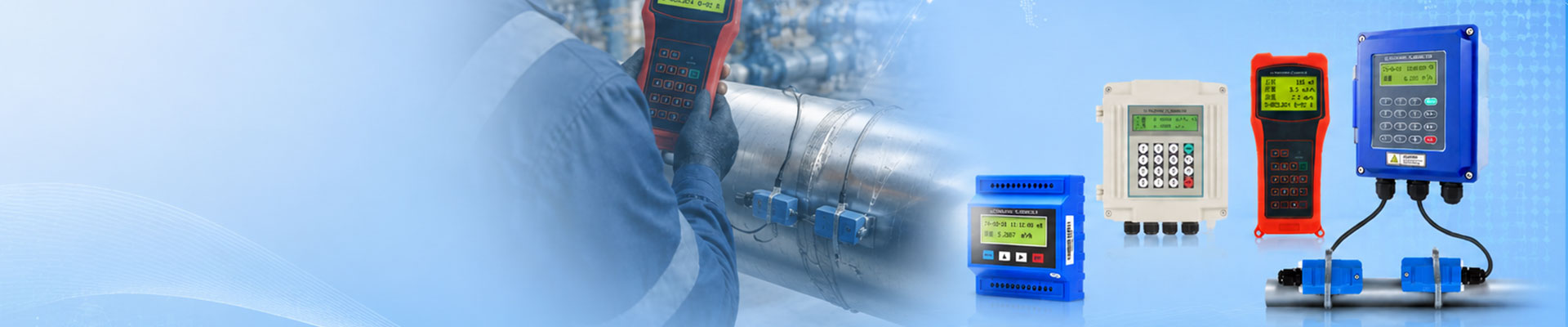
A clamp‑on ultrasonic flow meter sends two ultrasonic signals through the pipe wall and the fluid. One signal travels with the flow, the other against it. The meter calculates the time difference. That difference is directly proportional to the flow velocity. No cutting. No welding. No process shutdown.
In a water treatment plant in Surabaya, Indonesia, a technician installed a pair of transducers on a 12‑inch carbon steel line in 45 minutes. The pipe carried raw river water with high silt content. An inline meter would have worn out in months. The clamp‑on unit has been running for two years with only an occasional wipe‑down of the transducers.
Because the sensors are external, the meter works on metal pipes, PVC, HDPE, and even lined pipes. The only real requirement is that the pipe is full and the fluid has less than 3 % gas or solids by volume. Beyond that, accuracy degrades. Most engineers skip this part during the first trial and then call us. So here is a working rule: if you can see bubbles passing through a sight glass, a transit‑time ultrasonic meter will struggle. For aerated flows, a Doppler ultrasonic variant is the correct tool.
Where Non‑Contact Ultrasonic Meters Outperform Inline Devices
Inline meters need straight pipe runs, flanges, gaskets, and periodic calibration. Clamp‑on meters need only a clean pipe surface and acoustic coupling gel. In a food‑grade CIP (clean‑in‑place) line, there is no dead leg. Bacteria cannot hide because the smooth pipe interior remains uninterrupted. A dairy in New Zealand measures hot caustic CIP return flow with a clamp‑on meter rated to 180 °C. The same transducers also log rinse water volume at ambient temperature without swapping hardware.
For corrosive chemicals, the benefit is even clearer. A sodium hypochlorite dosing line in a desalination plant in Jeddah uses a DN25 PVDF pipe. An inline meter would require Hastelloy electrodes and a PTFE liner, raising the cost threefold. The clamp‑on ultrasonic meter simply straps on and measures through the wall. No material compatibility spreadsheet needed.
High‑pressure lines also favor clamp‑on designs. Offshore platforms in the Gulf of Thailand use clamp‑on flow meters on produced water injection lines at 150 bar. There is no need to derate a meter body or file a concession request with the classification society. The pipe itself is the meter body.
Signal Outputs and Integration with Existing Control Systems
Most Silver Automation Instruments ultrasonic transmitters output a 4‑20 mA HART signal. That pairs directly with any PLC or RTU analog input card. The same two wires carry the flow rate, totalized volume, and diagnostic data. On a recent job at a Brazilian ethanol plant, the integrator pulled totalizer resets and empty‑pipe alarms via HART without running extra cables.
For custody transfer, pulse outputs are available. A 0‑10 kHz pulse or an open‑collector output can feed a flow computer or a fiscal totalizer. An LNG terminal in Port Harcourt, Nigeria, requests Modbus RTU on RS485 for integration with a SCADA system. We configure that in firmware before shipment. Specify the protocol during ordering, not after delivery.
Temperature compensation is built in. Some applications, like chilled water for HVAC, need only a simple velocity measurement. Others, like superheated washdown water in a meat processing plant, need the meter to accept a PT100 input so it can calculate mass flow in kg/h. The transmitter can be ordered with an analog input for the temperature sensor. That detail saves you an extra calculation block in the control system.
No One Tells You About Couplant and Pipe Preparation
The coupling gel matters. In outdoor installations in the Middle East, direct sun dries the standard gel in weeks. We supply a high‑temperature silicone‑free couplant that survives 200 °C and sandstorms. A paint manufacturer in South
Pipe surface preparation also trips first‑time users. The transducers need clean, bare metal or plastic. Loose paint flakes, thick epoxy, and rust scale create an air gap that kills the ultrasonic signal. A quick pass with an angle grinder and a wire cup brush solves most problems. In ATEX Zone 1 environments, we supply a brass scraper and a non‑sparking brush instead. Tell us the zone during inquiry.
Model Selection for Common Industrial Fluids
Water and wastewater: A standard clamp‑on transit‑time meter like the SIL‑UF‑T works on pipes from DN25 to DN1200. For larger concrete pipes at a desalination plant intake, we extend to DN6000 with dual‑track transducers. Accuracy is ±1 % of reading once properly commissioned.
Hydrocarbons and refined fuels: A diesel transfer line in a tank farm in Mombasa, Kenya, uses the same SIL‑UF‑T because the speed of sound in diesel is stable and well‑characterized. For heavy fuel oil at 120 °C, the meter needs a heated transducer option to stop condensation inside the housing.
Acids, alkalis, and solvents: Because the transducers are external, the wetted material is whatever your pipe is. A phosphoric acid line in a Moroccan fertilizer plant uses a rubber‑lined steel pipe. The meter measures right through the lining. It does not care.
Liquids with tiny entrained solids: A 5 µm titanium dioxide slurry in a paint plant in Vietnam. The transit‑time meter measured without trouble because the solid loading was under 3 % and the particle size was tiny. For anything above that, we recommend a Doppler ultrasonic meter.
Installation Tips We Learned from Customer Sites
Always mount the transducers on a horizontal pipe run if possible. That keeps both sensors at the same horizontal plane and avoids gas pockets. On vertical pipes, flow must go upward so the pipe stays fully flooded.
The required straight pipe run is 10 diameters upstream and 5 diameters downstream. A double bend in two planes needs 30 diameters upstream. Many sites do not have that. In those cases, a dual‑path or multi‑path meter can compensate for profile distortion. Report the available straight run when you send your pipe spec.
For temporary surveys, a portable clamp‑on flow meter in a Pelican case is the fastest way to audit a pump or balance a chilled water loop. A commissioning engineer in Qatar carries one in his pickup. He checks pump flows at 12 different buildings in a day and emails the CSV file to the office.
Frequently Asked Questions
Can a clamp‑on ultrasonic flow meter measure gas flow?
No. Ultrasonic transit‑time meters for gas use a wetted transducer and a completely different frequency. Our clamp‑on units are only for liquids.
What is the minimum conductivity required?
None. Unlike magnetic flow meters, ultrasonic meters do not require conductive fluids. They work on deionized water, glycol, and solvents just as well as on tap water.
Does the meter work on fiberglass pipes?
Generally no. Fiberglass and some composite pipes scatter the ultrasonic signal excessively. We recommend a trial with a portable unit before committing.
How do I get a fixed price and delivery time?
Send us your fluid name, operating pressure in bar, temperature in °C, pipe outer diameter in mm, pipe material, and pipe wall thickness. Email those seven data points to [email protected] and we will return a quotation within one working day.
Can the meter be used for fiscal metering?
Yes, if the installation meets OIML R117 or API standards and the meter is calibrated on an accredited rig. Specify the requirement during ordering so we supply the correct uncertainty certificate and custody‑transfer firmware lock.
Request a quotation: Send your pipe size (DN), fluid name, temperature, and pressure to [email protected]. For fast service, WhatsApp us at +86-25-52155837 or call +86-25-68650347. WeChat: +86 15365082610. Silver Automation Instruments supplies calibrated, tested ultrasonic flow meters to process plants, system integrators, and distributors worldwide.