

 Current position > Product detail
『Turbine Flow Meter Working Principle: Angular Rotor Velocity Dynamics Basics』Related information(clamp on meter|electromagnetic meter|venturi meterrotameter|orifice meter|ultrasonic flow meter|mass flow meter|coriolis mass flow meter|coriolis flow meter|magnetic flow meter|magmeter flow meter|magflow flow meter|mag meter flow meter|electromagnetic flow meter|vortex flow meter|turbine flow meter|thermal mass flow meter|thermal flow meter|rotameter flow meter)

Turbine Flow Meter Working Principle: Angular Rotor Velocity Dynamics Basics
Quick Answer: A turbine flow meter converts fluid velocity into rotor rotation. Angular rotor velocity is proportional to volumetric flow rate within the linear Reynolds number range. Silver Instruments supplies inline and insertion turbine flow meters from DN4 to DN200 with pulse, 4-20 mA HART, and RS485 Modbus outputs.
Rotor Angular Velocity and Flow Rate
Inside a turbine flow meter, a multi-blade rotor sits on a shaft in the flow path. Fluid passes through a flow straightener and pushes the angled blades. The rotor spins at an angular velocity that tracks the average fluid velocity. So the rotor speed also tracks volumetric flow rate because the pipe cross-section is fixed.
In practice, the rotor does not spin at exactly the theoretical velocity. Bearing friction, magnetic drag, and fluid viscosity create slip. For clean water at 20 °C, slip is often less than 0.5 percent inside the linear range. At low flow, slip becomes larger. At high flow, cavitation can damage the rotor and reduce accuracy.
Pickup Systems and Signal Output
A magnetic pickup or radio frequency pickup detects each blade pass. The pickup produces a sine wave or pulse train. Pulse frequency equals rotor speed multiplied by blade count. A transmitter converts this frequency into a 4-20 mA HART signal, a pulse output, or RS485 Modbus.
Most engineers skip the pickup gap check during commissioning. Pickup gap matters because signal amplitude drops when the gap is too wide. Bearing drag increases when the gap is too tight. Silver Instruments sets the pickup gap at the factory and supplies the K-factor on the calibration certificate.
K-Factor and Angular Rotor Dynamics
K-factor is the number of pulses per liter or per gallon. For a DN15 turbine flow meter, a typical K-factor may be around 4,200 pulses per liter. For a DN50 meter, the K-factor may drop to about 300 pulses per liter because fewer blade passes occur per unit volume.
Here is the thing about turbine meter accuracy. The K-factor is not perfectly flat. Bearing drag reduces rotor angular velocity at low flow. Swirl or jetting above the rated flow can make the rotor read high. The linear range is often 10:1 for liquids and can reach 20:1 for clean water. For gasoline at 0.6 cP, the range is wider than for light oil at 4 cP.
Viscosity and Reynolds Number Effects
Viscosity changes the velocity profile inside the pipe. For liquids below 5 cP, turbine flow meters show a stable K-factor. Above 5 cP, the K-factor shift becomes visible. A diesel distributor in the Philippines tested a turbine flow meter with diesel at 3 cP and later used the same meter with heavy fuel oil at 18 cP. The meter reading moved outside the required accuracy. Silver Instruments recalibrated the meter for the new viscosity range.
Because turbine flow meters depend on momentum transfer, low Reynolds number flow breaks the linear relationship. The exact limit depends on meter size and bearing type. For DN25 and larger, a Reynolds number above 20,000 is a safe starting point.
Installation and Flow Conditioning
Turbine flow meters need straight pipe upstream and downstream. A standard
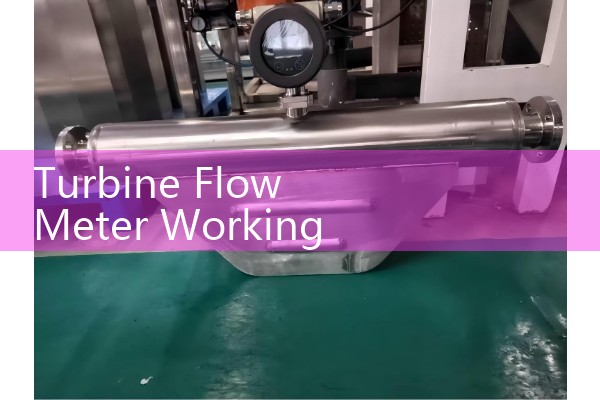
If a control valve or elbow is too close, swirl reaches the rotor. Rotor angular velocity may read higher than actual flow. A flow conditioner before the meter solves this problem. We have seen this on customer sites many times in Southeast Asia where space is limited.
Common Applications for Turbine Flow Meters
Turbine flow meters work well in desalination plants, fuel loading skids, diesel generator supply lines, marine fuel transfer, water batching, and clean chemical dosing. In a desalination plant in Oman, turbine flow meters monitor permeate water and antiscalant dosing. In New Zealand dairy plants, sanitary turbine meters handle CIP water and clean product.
Do not use turbine flow meters for dirty water, abrasive slurries, or fluids with fibers. Bearing wear changes the angular rotor velocity and shifts the K-factor. For dirty water, choose an electromagnetic flow meter from Silver Instruments instead.
Silver Instruments Turbine Flow Meter Options
Silver Automation Instruments is a turbine flow meter manufacturer and supplier. We provide inline turbine flow meters from DN4 to DN200, insertion models for large pipes, and sanitary designs for food and beverage. Wetted materials include 316L stainless steel, PTFE, and tungsten carbide bearings. Pressure ratings reach PN40 or higher depending on the body design. Optional PT100 temperature compensation improves accuracy for fuels when density correction is needed.
Turbine flow meter price depends on line size, process connection, explosion proof rating, and output type. A basic DN25 inline turbine flow meter with pulse output costs less than a DN80 model with 4-20 mA HART and ATEX Zone 1 approval. Send us your pressure (bar), temperature (°C), pipe size (DN), and flow range for a turbine flow meter quote.
FAQ
What is the working principle of a turbine flow meter?
Fluid passes through the meter and spins a bladed rotor. The angular rotor velocity is proportional to volumetric flow rate in the calibrated range. A pickup converts blade passes into a frequency signal.
Does a turbine flow meter measure mass flow?
No. A standard turbine flow meter measures volumetric flow at line conditions. For mass flow in kg/h, specify density compensation or choose a Coriolis mass flow meter from Silver Instruments.
What happens if viscosity changes after installation?
The K-factor shifts and the reading loses accuracy. Recalibrate the meter if viscosity changes by more than 2 cP or if the Reynolds number falls below the meter limit.
Can a turbine flow meter handle dirty water?
No. Particles damage the bearing and rotor. For dirty water or wastewater with conductivity above 5 µS/cm, choose an electromagnetic flow meter from Silver Instruments.
How do I get a turbine flow meter quote?
Send us your fluid name, flow range, pipe size in DN, pressure in bar, temperature in °C, and required output. Contact Silver Instruments at Tel: +86-25-68650347, WhatsApp: +86-25-52155837, WeChat: +86 15365082610. Or visit flow-meter.com.au.