

 Current position > Product detail
『Air Flow Meter Sensor Cleaner: Safe Electronic Spray Maintenance Methods』Related information(clamp on meter|electromagnetic meter|venturi meterrotameter|orifice meter|ultrasonic flow meter|mass flow meter|coriolis mass flow meter|coriolis flow meter|magnetic flow meter|magmeter flow meter|magflow flow meter|mag meter flow meter|electromagnetic flow meter|vortex flow meter|turbine flow meter|thermal mass flow meter|thermal flow meter|rotameter flow meter)
Air Flow Meter Sensor Cleaner: Safe Electronic Spray Maintenance Methods
Quick Answer: Use a non-conductive electronic spray cleaner that leaves zero residue. Power down the flow meter, isolate the pipe, release the pressure, and spray the sensor in short bursts. Wait 10 to 15 minutes before powering up again.
Silver Automation Instruments supplies industrial air flow meters for compressed air, combustion air, biogas, and process gas lines. Dirty sensors are one of the most common causes of drift in thermal mass flow meters and vortex flow meters. A thin oil film can change the 4-20 mA HART output by 2 to 4 percent even though the meter still passes a basic zero check.
Why Air Flow Meter Sensors Need Cleaning
Compressed air systems pull in dust, water vapor, and oil mist. Screw compressors leak tiny amounts of oil past the air end. Aftercoolers and dryers remove some water but not all of it. In tropical sites, high humidity causes condensation inside pipes at night. This mixture lands on the sensor and bakes onto the surface when the air temperature rises.
We have seen this on customer sites many times. A biscuit factory in Indonesia used a thermal mass flow meter to measure combustion air. The flow reading was stable for six months. Then the reading moved from 820 kg/h to 790 kg/h with no process change. The sensor tip was covered with a sticky brown residue. After cleaning with a plastic-safe electronic spray, the reading returned to 822 kg/h within two minutes.
Safe Electronic Spray Cleaner Selection
Use a cleaner that is non-conductive, fast-drying, and residue-free. Many electronic sprays contain hydrofluorocarbon solvents. These are safe for PT100 elements, RTD wires, and ceramic sensor surfaces. In ultrapure gas lines, the cleaner must have conductivity below 1 µS/cm after evaporation. Do not use brake cleaner, carburetor cleaner, or silicone spray. Brake cleaner attacks plastic seals. Silicone spray leaves an insulating layer. Both cause more drift than the original dirt.
Most engineers skip this part, but the spray must be plastic-safe. Vortex flow meters often have a plastic bluff body or a plastic sensor housing. Thermal mass flow meters have a thin PTFE insulation layer on the probe. A harsh solvent will crack that layer. Check the label for the words plastic-safe and no residue.
Step by Step Cleaning Procedure
First, check the area classification. If the meter is in ATEX Zone 1 or IECEx Zone 1, follow plant hot work and gas testing rules. Use a low static spray nozzle and ground the flow meter body. Silver Instruments ATEX-certified flow meters must only be opened by qualified technicians after the area is proven gas-free.
Second, power down the flow meter. Remove the 24 V DC supply. Isolate the pipe section. For compressed air lines, close the inlet and outlet valves. Open the vent valve and release the pressure to near zero. Do not remove the sensor while the line is under 6 bar pressure. The probe can become a projectile.
Third, remove the sensor carefully. For insertion thermal mass flow meters, loosen the compression fitting. Pull the probe out slowly. Watch for residual pressure. Let the sensor cool to below 40 °C before spraying. A hot sensor can crack when the cold spray hits the ceramic surface.
Fourth, spray in short bursts from a distance of 15 to 20 cm. Do not soak the sensor. Let the liquid run off. For stubborn deposits, use a soft nylon brush after the first spray. Then spray one more light coat. Do not wipe the sensor with a cotton cloth. Fibers can stick to the surface and change heat transfer.
Fifth, dry the sensor for 10 to 15 minutes. In humid locations, dry for 20 minutes. Reinstall the sensor and tighten the fitting to the torque listed in the manual. Power up the meter only after the body is fully dry. Check the zero point and compare the live value against a known reference. If the reading shift is still more than 1 percent, inspect the sensor for damage.
Air Flow Meter Specific Notes
Thermal mass flow meters are very sensitive to surface contamination. The mass flow signal depends on heat transfer from the heated RTD to the gas. A thin film changes that heat transfer. For compressed air measurement, a Silver Instruments TMF series insertion prob
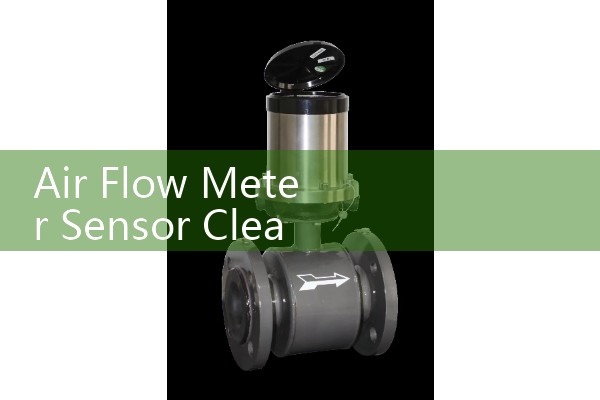
Vortex flow meters measure flow by detecting vortices downstream of a bluff body. The sensor is usually not in direct contact with the gas, but oily deposits can coat the sensing face. Use the same electronic spray method for the sensor pocket. Do not use metal tools to scrape the bluff body. Scratches change the K-factor and reduce accuracy.
Ultrasonic flow meters with clamp-on transducers do not need internal cleaning. The transducer face only needs a clean mounting surface. Wipe it with a dry cloth. Do not spray the coupling gel area. If the transducer is wetted, use the same plastic-safe electronic spray and reapply the coupling compound after drying.
Recommended Silver Instruments Models for Air Service
For clean compressed air from DN15 to DN150, choose the Silver Instruments TMF series thermal mass flow meter. It provides 4-20 mA HART output, a built-in temperature sensor, and a low-flow cut-off. Typical accuracy is plus or minus 1.5 percent of reading from 0.3 to 30 m/s. Use the TMF series for compressed air audits, leak detection, and nitrogen flow.
For wet or dirty air where a thermal meter may fail, use the Silver Instruments VX series vortex flow meter. It handles air flow up to 60 m/s and process temperatures from minus 20 °C to 250 °C. The sensor can be replaced without cutting the pipe. VX series meters are common in combustion air lines, boiler feed air, and biogas mixing.
For large duct flow from DN200 to DN1000, the Silver Instruments ultrasonic flow meter with insertion transducers works well. It is less sensitive to dust than a thermal probe, but the transducer faces should still be cleaned every 12 months.
Maintenance Schedule and Records
In clean air applications, inspect the sensor every 6 months. In compressor rooms or dusty plants, inspect every 3 months. A paint manufacturer in Southeast Asia thought their air flow meter was faulty. The actual issue was fine paint dust. The sensor was cleaned every month after that. The meter lasted another four years without replacement.
Record cleaning dates, cleaning agents, and before and after readings. Use a paperless recorder from Silver Instruments to log the 4-20 mA HART signal during cleaning. This creates proof for ISO 9001 and energy management audits. The recorder shows the exact time when the sensor was removed and when the signal returned to normal.
FAQ: Air Flow Meter Sensor Cleaning
Can I use brake cleaner on an industrial air flow meter sensor?
No. Brake cleaner can attack plastic, elastomer seals, and PTFE insulation. Use only a plastic-safe electronic spray cleaner with no residue.
How often should we clean air flow meter sensors?
For clean compressed air, every 6 months is enough. For dusty plants, compressor rooms, or oil-lubricated compressors, clean every 3 months. In food plants, follow internal sanitation schedules and inspect more often if the air contacts product.
Is electronic spray cleaner safe for ATEX Zone 1 flow meters?
Only when the area is de-classified and proven gas-free. Power down the meter, release pressure, and use a grounded nozzle. Check your plant-specific explosion protection procedures before opening the housing.
What happens if the sensor is not dry before power up?
Moisture can create a short across the sensor leads. This causes a full-scale error, a burned fuse, or permanent damage to the electronics. Wait 10 to 15 minutes. In humid areas, wait 20 minutes.
Which Silver Instruments air flow meter is easiest to clean?
The TMF series insertion thermal mass flow meter is easiest because the probe can be removed without cutting the pipe. The VX series vortex flow meter also has a replaceable sensor pocket and is easier to clean in wet air service.
For a cleaning kit recommendation or a flow meter spare sensor quote, send your pressure in bar, temperature in °C, pipe size DN, and flow range to Silver Automation Instruments. Tel: +86-25-68650347, Whatsapp: +86-25-52155837, WeChat: +86 15365082610. The team can also check your current model against the Silver Instruments TMF or VX series.