

 Current position > News detail
『How to Read Oxygen Flow Meter with Ball: Home Medical Gas Delivery Set Tracking Guidelines』Related information(clamp on meter|electromagnetic meter|venturi meterrotameter|orifice meter|ultrasonic flow meter|mass flow meter|coriolis mass flow meter|coriolis flow meter|magnetic flow meter|magmeter flow meter|magflow flow meter|mag meter flow meter|electromagnetic flow meter|vortex flow meter|turbine flow meter|thermal mass flow meter|thermal flow meter|rotameter flow meter)
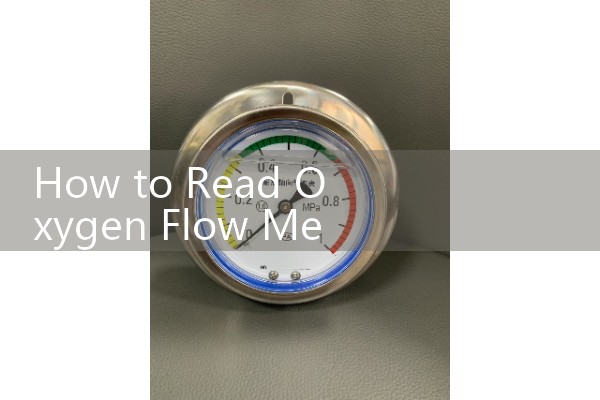
How to Read Oxygen Flow Meter with Ball: Home Medical Gas Delivery Set Tracking Guidelines
Quick Answer: Read the center of the ball against the scale on the oxygen flow meter tube. Keep the tube vertical and read at eye level. Set the flow after the oxygen source pressure is stable and record the L/min value from the ball center.
Why the Ball Position Changes the Reading
A ball type oxygen flow meter has a tapered glass or polycarbonate tube. The ball rises when gas flows upward. A wider gap between the ball and the tube wall allows more gas to pass. The scale is printed on the tube in liters per minute. Common home oxygen units use a 0 to 5 L/min tube or a 0 to 15 L/min tube for high flow masks. The reading point is the center of the ball, not the top edge or bottom edge.
In practice, many biomedical technicians in Southeast Asia and the Middle East read the ball center because the ball diameter is the stable reference. A metal ball can create a reflection on the scale. Move your head slightly until the ball center lines up with the marking. A plastic ball can stick at low flow. Tap the tube body lightly with a finger if the ball does not settle within a few seconds.
Equipment Needed Before You Read the Flow
You need a clean vertical flow meter, an oxygen source such as a concentrator or cylinder regulator, and a delivery device such as a nasal cannula or mask. Check the inlet pressure. Most home oxygen concentrators deliver low pressure under 10 psi. Cylinder regulators with ball flow meters usually work at 50 psi inlet pressure. A pressure drop after the regulator can make the ball read lower than the actual flow. Check the filter and the humidifier bottle if used. A blocked humidifier can create back pressure and disturb the ball position.
Here is the thing. Ball flow meters are position sensitive. If the tube is tilted more than 5 degrees from vertical, the ball can rub against the tube wall and give a false reading. We have seen this on customer sites many times. A home oxygen provider in Bangkok found a flow error of 0.5 L/min because the flow meter was mounted on a tilted cylinder cart.
Step by Step Reading Procedure
Set the oxygen source to the prescribed flow range before connecting the patient. Start from zero and increase slowly. Wait for the ball to stop moving. Position your eye level with the ball center. Read the scale line that crosses the middle of the ball. Record the value in L/min. For a 0 to 5 L/min tube, the markings are often at 0.5 L/min intervals. For a 0 to 15 L/min tube, the markings may be at 1 L/min intervals. If the ball center sits between two lines, estimate the value. Do not read the top of the ball for a ball float. That can overstate the flow by 0.5 to 1 L/min on a small home care scale.
Most technicians skip this part. After setting the flow, check that the ball is floating freely and not touching the wall. A stable ball should hover without bouncing. A bouncing ball often means high humidity inside the tube or a pressure pulse from the oxygen source. Clean the tube or check the regulator if the bounce does not stop.
Common Errors on Home Oxygen Ball Flow Meters
Reading at an angle causes parallax error. A 10 degree viewing angle can shift the reading by half a division. Placing the flow meter on a bed or table instead of a vertical stand creates the same problem. Using a flow meter calibrated for air with oxygen also causes errors. Gas density and viscosity differ. A ball flow meter calibrated for air will read higher than the actual oxygen flow because oxygen is slightly more dense than air. At a scale reading of 5 L/min, actual oxygen flow may be close to 4.76 L/min. This matters for central gas panels and home care repair shops that test with compressed air.
Another mistake is reading the bottom of the ball. Some old style rotameters use a top read float, but most ball type oxygen flow meters use a center read ball. Check the manual from the flow meter manufacturer if the tube has two different float shapes. A ball float is read at the center. A bullet shaped float may be read at the top edge. We have seen a clinic in Lima replace a bullet float tube with a ball float tube and keep reading the top edge. That error changed the delivered oxygen flow by around 15 percent on a 0 to 15 L/min tube.
Flow Settings for Typical Home Oxygen Delivery
A nasal cannula commonly runs at 1 to 6 L/min. A simple face mask runs at 5 to 10 L/min. A non rebreather mask runs at 10 to 15 L/min. These are general starting ranges. The physician order always overrides the general range. Infants and pediatric patients often use 0.1 to 1 L/min and need a low flow ball flow meter with fine markings.
For a home care company that manages multiple concentrator models, standardize the reading method. Train every nurse and technician to read the ball center at eye level. Keep a log of flow checks. A quick log entry includes the date, patient flow setting, actual ball reading, tube condition, and the name of the person who checked the unit.
When to Replace or Calibrate a Ball Type Oxygen Flow Meter
Replace the flow meter tube if the scale is faded, the tube is cracked, or the ball sticks even after cleaning. Calibration is not usually adjusted in the field. Small medical ball flow meters are often treated as replaceable components. If the flow reading must be verified, bench test the tube against a calibrated reference flow meter at the same gas type, pressure, and temperature. For central oxygen line monitoring, a thermal mass flow meter with a digital output can give more stable data than a ball tube.
Silver Automation Instruments supplies gas flow instruments for medical gas panels, oxygen line monitoring, and repair shops. A common recommendation for central oxygen lines is a thermal mass flow meter with a 4-20 mA HART output and a range of 0 to 50 L/min or 0 to 100 L/min. For local bench testing, a small glass tube ball flow meter with a 1/4 inch NPT or G1/4 connection is often enough. Send us your gas type, flow range in L/min, inlet pressure, connection size, and quantity. That data lets us quote the right model quickly.
FAQ
Do I read the top or middle of the ball? Read the center of the ball for a ball type oxygen flow meter. The top edge is used for some bullet shaped floats, but a round ball uses the center line.
Why does the ball bounce during oxygen flow adjustment? The ball bounces when the inlet pressure is unsteady, the tube is humid, or the flow meter is tilted. Set the regulator slowly, dry the tube, and keep the meter vertical.
Can I use an air calibrated flow meter to measure oxygen? No. A ball flow meter calibrated for air will overstate the oxygen flow. Use a tube calibrated for oxygen or apply a correction factor from the manufacturer.
What is the correct flow for a home nasal cannula? Most adults use 1 to 6 L/min. The exact flow must follow the physician order. Record the ball center reading at eye level for every flow check.
How often should a home oxygen flow meter be checked? Check the ball position and tube condition at each patient visit or cylinder change. Replace the tube every 12 to 24 months if the scale fades or the ball sticks.
Contact Silver Automation Instruments
For help with medical gas flow meters, oxygen line monitoring, or replacement ball tubes, send us your gas type, flow range, inlet pressure, connection thread, and quantity. Tel: +86-25-68650347. Whatsapp: +86-25-52155837. WeChat: +86 15365082610.