

『Flow Meter Distance Before and After Installation: Straight Run Pipe Diameter Ratios』Related information(clamp on meter|electromagnetic meter|venturi meterrotameter|orifice meter|ultrasonic flow meter|mass flow meter|coriolis mass flow meter|coriolis flow meter|magnetic flow meter|magmeter flow meter|magflow flow meter|mag meter flow meter|electromagnetic flow meter|vortex flow meter|turbine flow meter|thermal mass flow meter|thermal flow meter|rotameter flow meter)
Flow Meter Distance Before and After Installation: Straight Run Pipe Diameter Ratios
Quick Answer: The required flow meter distance before and after installation depends on the meter type and the upstream fitting. Electromagnetic, vortex, ultrasonic, and thermal mass flow meters usually need 10D to 15D upstream and 5D downstream from elbows, pumps, and valves. Coriolis and oval gear flow meters often need zero straight run.
Why Straight Run Pipe Diameter Ratios Matter
Straight run pipe diameter ratios define the settling length for a stable flow profile. A 10D upstream distance means ten times the internal pipe diameter before the meter. For a DN80 pipe, 10D equals 800 mm. Elbows, tees, reducers, pumps, and partially open valves disturb the velocity profile. The meter then sees a distorted flow field and the reading can drift or offset. In practice, most engineers skip this part because the pipe rack is tight. That decision can turn a 0.5 percent meter into a 2 percent meter.
General Flow Meter Distance Before and After Installation Guide
Flow meter distance before and after installation should always be checked when you plan a new metering point. Different meter types have different sensitivity to flow profile distortion. Inline electromagnetic, vortex, and ultrasonic meters depend on a fully developed velocity profile. Coriolis and oval gear meters do not. Thermal mass flow meters with insertion probes also need enough upstream settling because the probe measures gas velocity at a single point. Use internal pipe diameter D as the unit. For a DN100 meter, 1D is 100 mm. Upstream straight run is measured from the disturbance to the meter inlet. Downstream straight run is measured from the meter outlet to the next fitting.
Electromagnetic Flow Meters
A standard magnetic flow meter needs 10D upstream and 5D downstream from a 90 degree elbow. After a pump, increase the upstream distance to 15D. After a control valve, use 20D upstream if possible. We have seen a wastewater plant in Vietnam with a DN200 electromagnetic flow meter and 4-20 mA HART output. The water conductivity was 850 µS/cm. The reading was unstable because only 3D upstream straight run existed after a 90 degree elbow. After the pipe spool was changed to 10D, the reading stabilized.
Vortex Flow Meters
Vortex flow meters are more sensitive to flow profile distortion. For steam, gas, and low viscosity liquid flow, use 15D upstream and 5D downstream from an elbow. After a control valve, 20D upstream is safer. Last year a customer in Thailand asked us about a DN100 vortex flow meter for saturated steam. The meter showed a 12 percent error after installation. The upstream pipe had only 4D between the meter and a steam control valve. After the piping was modified to 18D, the error fell below 1 percent.
Ultrasonic Flow Meters
Clamp-on ultrasonic flow meters need 10D to 20D upstream and 5D downstream, depending on the transducer configuration. Inline ultrasonic meters often need 10D upstream and 5D downstream. For a DN50 water line, 10D is 500 mm. A desalination plant in Oman used a DN150 ultrasonic meter with 10D upstream after a Y-strainer. The meter accuracy stayed within 0.5 percent.
Coriolis Mass Flow Meters
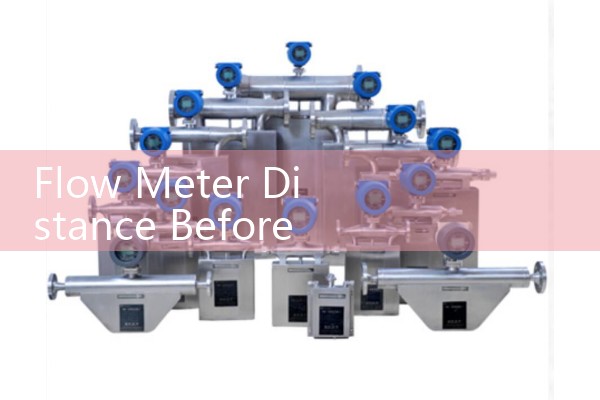
Coriolis mass flow meters do not need straight run pipe diameter ratios in most installations. The meter measures mass flow directly through the vibrating tubes. Flow profile distortion has almost no effect. A dairy plant in Mexico install
Oval Gear Flow Meters
Oval gear flow meters are positive displacement devices. They do not require straight run before or after installation. A gear meter can be installed directly after a pump, filter, or valve. For a paint manufacturer in Southeast Asia, a DN15 oval gear meter measured solvent flow after a gear pump. The solvent viscosity was 80 cP. The line had almost no straight run. Because the gear chambers trap a fixed volume, the meter maintained repeatability of 0.1 percent.
Thermal Mass Flow Meters
Thermal mass flow meters for gas often use insertion probes. They need 15D upstream and 10D downstream from elbows, tees, or valves in most compressed air and gas lines. For a DN50 air line, 15D equals 750 mm. In ATEX Zone 1 gas service, thermal mass flow meters can work well. But do not ignore straight run.
Common Installation Mistakes We See
Here is the thing. A flow meter installed after a partially open valve will not read correctly. The valve creates a jet and destroys the velocity profile. Another mistake is reducing the pipe immediately before the meter. That creates swirl and uneven flow lines. Some customers install magnetic or ultrasonic meters in a vertical downpipe with free discharge. The pipe may not be full and the meter reads incorrectly. We also see meters installed before the minimum downstream distance. Downstream disturbances can create back pressure pulsations.
How to Order with Straight Run Data
For a fast quotation, send us the pipe size (DN), process pressure (bar), process temperature (°C), flow range, and the type of upstream fittings. Tell us the straight run available before and after the meter. We can then recommend the right meter type for your piping.
Silver Automation Instruments supplies Coriolis mass flow meters, electromagnetic flow meters, ultrasonic flow meters, vortex flow meters, oval gear flow meters, thermal mass flow meters, pressure transmitters, and paperless recorders. We serve customers in Southeast Asia, Oceania, Latin America, Africa, and the Middle East.
Send your installation details to:
Tel: +86-25-68650347
Whatsapp: +86-25-52155837
WeChat: +86 15365082610
Website: flow-meter.com.au
FAQ
What is the minimum straight run distance for an electromagnetic flow meter?
Use 10D upstream and 5D downstream from a 90 degree elbow. After a pump or control valve, use 15D to 20D upstream if possible.
Does a Coriolis mass flow meter need straight pipe runs?
No. Coriolis mass flow meters do not need straight run pipe diameter ratios in most installations.
What happens if the straight run is too short before a vortex flow meter?
The vortex meter can show a repeatable offset or unstable readings. A DN100 steam vortex meter with only 4D upstream after a valve may show a 12 percent error.
Can oval gear flow meters work directly after a pump or valve?
Yes. Oval gear flow meters are positive displacement devices and do not require straight run before or after installation.
How do I send the correct installation data to Silver Automation Instruments?
Send us your pipe size (DN), pressure (bar), temperature (°C), flow range, and the type of upstream fittings. Include the available straight run distance before and after the meter.
 Hot Blog
 Related AD