

『DeviceNet Flow Meter: Industrial Network Protocol Connected Process Controls』Related information(clamp on meter|electromagnetic meter|venturi meterrotameter|orifice meter|ultrasonic flow meter|mass flow meter|coriolis mass flow meter|coriolis flow meter|magnetic flow meter|magmeter flow meter|magflow flow meter|mag meter flow meter|electromagnetic flow meter|vortex flow meter|turbine flow meter|thermal mass flow meter|thermal flow meter|rotameter flow meter)
DeviceNet Flow Meter: Industrial Network Protocol Connected Process Controls
Quick Answer: A DeviceNet flow meter sends flow rate, total, and diagnostic data over a CAN-based DeviceNet network to a PLC or DCS. Silver Automation Instruments supplies electromagnetic, Coriolis, vortex, thermal mass, and oval gear flow meters with DeviceNet interface modules for water, chemical, oil, gas, food, and marine plants. Send pipe size, fluid, flow range, pressure, and temperature for a fixed quote.
Why DeviceNet Still Works in Process Plants
DeviceNet is not new. Many plants in Southeast Asia, Latin America, and the Middle East still run DeviceNet networks on Rockwell and Omron PLC platforms. A flow meter with a DeviceNet interface can sit on the same CAN trunk as drives, motor starters, and I/O blocks.
The main benefit is wiring. One DeviceNet trunk cable carries 24 VDC power and signal. You do not pull separate 4-20 mA pairs from every flow meter to the PLC cabinet. For a water treatment plant with 12 flow meters spread across a clarifier area, this saves hundreds of meters of cable and many hours of termination work.
In practice, DeviceNet works well at 125 kbit/s for longer runs up to 500 m. At 250 kbit/s the maximum trunk length is 250 m. At 500 kbit/s it drops to 100 m. Most process sites use 125 kbit/s because the instruments are scattered.
Flow Meter Types That Connect to DeviceNet
Not every flow meter needs a native DeviceNet card. Silver Instruments can supply a flow meter with a DeviceNet interface module or a DIN-rail gateway that converts pulse, 4-20 mA, or Modbus RTU to DeviceNet. The right approach depends on the meter type and the control system.
Electromagnetic flow meters are common for water and wastewater. They handle DN15 to DN300 lines and conductivity down to 5 µS/cm. A DN80 electromagnetic meter on a raw water line can send flow rate, forward total, reverse total, and empty pipe alarm over DeviceNet.
Coriolis mass flow meters fit chemical and food plants. They measure mass flow, density, and temperature. A DN15 Coriolis meter can read 0 to 100 kg/h and output data over DeviceNet plus a separate 4-20 mA HART signal for local indication.
Oval gear flow meters work for viscous fluids like diesel, fuel oil, and resins. They are common from 1 cP to 1000 cP. A paint manufacturer in Southeast Asia used a DN25 oval gear flow meter with DeviceNet to batch solvent and resin into mixing vessels.
Vortex flow meters handle steam, compressed air, and some gases. Thermal mass flow meters fit biogas and aeration air. Both can be connected to DeviceNet through an interface module.
Last year a customer in Vietnam asked us for a DeviceNet flow meter on a DN50 brine line. They needed ATEX Zone 1 rating. We supplied a DN50 electromagnetic flow meter with DeviceNet interface and a remote display.
DeviceNet Wiring and Installation in Process Plants
Here is the thing: the meter is only one node on the network. The whole trunk must follow DeviceNet rules. Use thick round cable for trunk lines and thin round cable for drops. Each drop should be under 6 m. The network needs 121 ohm terminating resistors at both ends. One 24 VDC power supply usually feeds the network.
Most engineers skip this part during installation. A missing terminator resistor causes intermittent node errors. We have seen this on customer sites many times. The flow meter becomes a suspect but the real problem is wiring or grounding.
So before you order a DeviceNet flow meter, check the network baud rate, trunk length, number of existing nodes, and availabl
Typical Process Control Applications by Industry
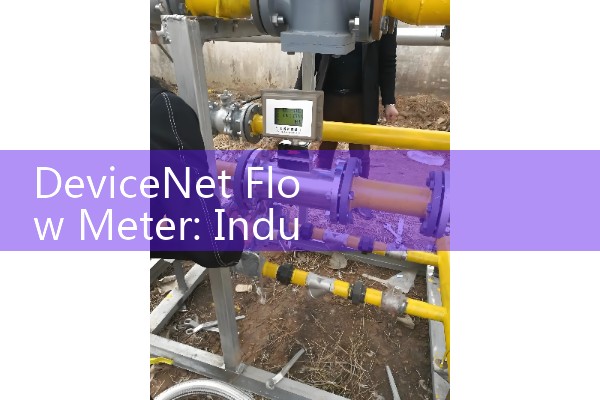
Water and wastewater plants in Malaysia and the Philippines use DeviceNet flow meters for raw water, backwash water, chemical dosing, and sludge transfer. Electromagnetic meters fit most of these lines. The empty pipe alarm helps prevent air calibration drift.
Chemical plants in Chile and Peru use Coriolis or oval gear meters on reactor feed lines. They need batch totals and density readings. DeviceNet sends all these values to a Rockwell CompactLogix or ControlLogix PLC without extra signal conditioners.
Food and beverage plants in Australia and New Zealand often use sanitary electromagnetic or Coriolis meters. They can connect to DeviceNet for CIP flow monitoring and totalizer reset. A paperless recorder in the control room can log the same values via the PLC.
Oil and gas operations in the Middle East use vortex or Coriolis meters on fuel gas, liquid fuel, and injection water. Marine systems also use DeviceNet on some vessels for fuel transfer and bilge water flow monitoring.
How to Specify a DeviceNet Flow Meter for Your Plant
Send us the following data: fluid name, viscosity in cP if non-water, pipe size in DN, flow range in m3/h or kg/h, pressure in bar, temperature in °C, process connection type, and hazardous area classification. Also tell us the PLC type and the existing DeviceNet baud rate.
We will reply with a fixed price and a recommended meter. For a DN50 diesel line at 0 to 20 m3/h and 10 bar, we may recommend an oval gear flow meter with DeviceNet interface. For a DN100 wastewater line at 0 to 200 m3/h, we may recommend an electromagnetic flow meter with DeviceNet gateway.
Do not send a vague request for a flow meter price. The quote will be slow and may not fit. Send us your pressure (bar), temperature (°C), pipe size (DN), and flow range. That is the fastest way to get a workable proposal.
FAQ: DeviceNet Flow Meter Selection
1. Can I connect a standard 4-20 mA flow meter to DeviceNet?
Yes. Use a DeviceNet gateway module that accepts 4-20 mA, pulse, or Modbus RTU inputs and maps them to DeviceNet I/O. Silver Instruments can supply the meter and the gateway as one package.
2. What flow meter types support DeviceNet?
Electromagnetic, Coriolis, oval gear, vortex, ultrasonic, and thermal mass flow meters can all connect to DeviceNet. Some use a native module. Others use a DIN-rail gateway.
3. What baud rate should I select for a DeviceNet flow meter?
Use 125 kbit/s for long trunks up to 500 m. Use 250 kbit/s for trunks up to 250 m and 500 kbit/s only for short runs under 100 m. Most process plants run 125 kbit/s for flow meters.
4. Can DeviceNet flow meters work in hazardous areas?
Yes. We can supply ATEX Zone 1 or Zone 2 rated flow meters with DeviceNet interface. Tell us the gas group and temperature class in your area.
5. Do I need a special cable for DeviceNet?
Yes. Use DeviceNet certified thick round cable for the trunk and thin round cable for drops. The cable carries 24 VDC power and CAN signal. Do not use ordinary instrument cable.
Contact Silver Automation Instruments for a DeviceNet flow meter quote. Tel: +86-25-68650347. Whatsapp: +86-25-52155837. WeChat: +86 15365082610. Send us your pressure (bar), temperature (°C), pipe size (DN), and flow range. A sales engineer will reply within 12 hours.
 Hot News
 Related AD