
 About Us
Flow Measurement Types: Universal Engineering Reference Charts for Process Fluids
Quick Answer: For conductive water based liquids, electromagnetic flow meters are the default choice. For direct mass flow, density, and viscous oils, Coriolis meters give kg/h readings without extra compensation. For steam and utility gases, vortex or thermal mass meters fit better. Use this guide to shortlist by fluid type, pipe size, and operating conditions.
This page is a working reference for engineers and buyers. It covers the main flow measurement types used in process fluids. Silver Automation Instruments supplies these meters to water plants, chemical sites, food factories, and oil terminals in Southeast Asia, the Middle East, Latin America, and Africa.
In practice, most selection mistakes happen because fluid conductivity, viscosity, or gas phase is ignored. So we keep the reference notes short. You can compare by fluid and line size without reading a full handbook.
How to Match Flow Measurement Type to Process Fluid
Start with three data points. Pipe size such as DN15, DN50, or DN200. Fluid type and phase. Flow range in kg/h, m3/h, or l/h. Add pressure in bar and temperature in Celsius. This is the exact data needed for sizing.
For liquids with conductivity above 20 µS/cm, electromagnetic flow meters are hard to beat. They have no moving parts and handle slurries, sludge, acids, and caustic. For deionized water or oils with low conductivity, electromagnetic meters will not read reliably.
For viscous fluids above 50 cP, positive displacement oval gear meters give repeatable batch totals. For low viscosity solvents or hydrocarbons, Coriolis mass meters measure mass flow directly and also report density. This removes the cost of separate density instruments.
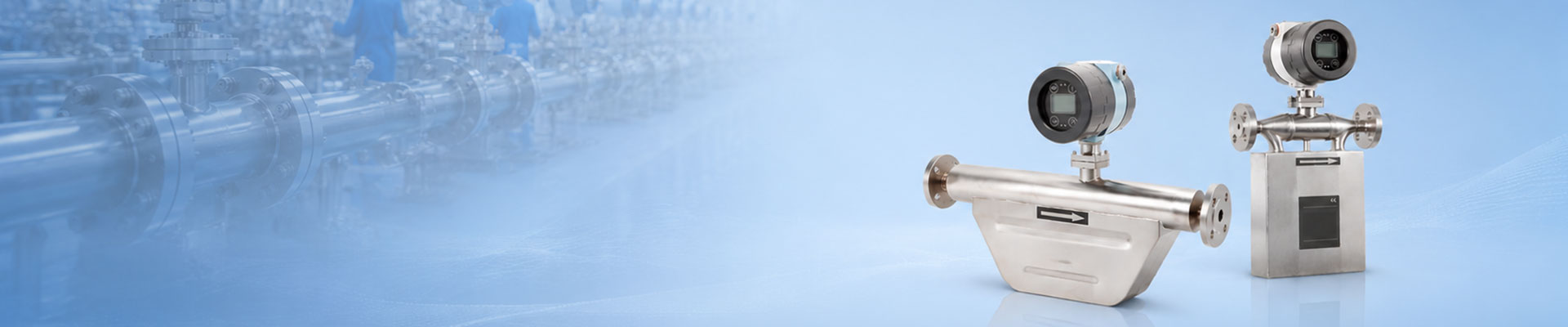
Coriolis Mass Flow Meters
Use Coriolis meters when you need mass flow in kg/h, density, or high accuracy. They work on almost any liquid. They are common in chemical dosing, palm oil blending, molasses transfer, and LPG mass measurement. A direct mass meter removes the need for temperature and pressure compensation when the fluid composition changes.
Silver Instruments supplies Coriolis meters from DN15 to DN200. Typical accuracy is 0.2 percent of rate for liquids. Some models include 4-20 mA HART output and ATEX Zone 1 certification. If your process has entrained gas, tell us the gas volume fraction. Coriolis meters can handle some bubbles, but slug flow will disturb the reading.
We have seen this on customer sites many times. A paint manufacturer in Southeast Asia replaced a turbine meter with a DN25 Coriolis meter because the turbine was damaged by solvent. The Coriolis meter measured kg/h directly and the batch accuracy improved to 0.5 percent.
Electromagnetic Flow Meters
Electromagnetic flow meters are the workhorse for raw water, wastewater, sludge, seawater, and chemical slurries. They need a minimum conductivity. A common limit is 5 µS/cm for many models. For desalination plant brine and seawater, conductivity is high enough. For demineralized water after reverse osmosis, choose a different technology.
These meters are available in DN10 to DN1200. Liners include PTFE, hard rubber, and polyurethane. Electrodes can be 316L, Hastelloy, titanium, or tantalum. Choose the liner and electrode based on chemical compatibility and temperature. For abrasive mining slurry, use a polyurethane liner and a tungsten carbide electrode if the solids loading is high.
A water utility in Vietnam installed DN300 electromagnetic meters on raw water intake lines. The meters send flow data by 4-20 mA HART to a PLC. The customer avoided the pressure loss of an orifice plate and reduced annual maintenance hours.
Ultrasonic Flow Meters
Ultrasonic flow meters cover clean liquids, large pipes, and temporary flow surveys. Clamp-on models mount outside the pipe. This is useful in retrofits where cutting the pipe is expensive or shutdown time is limited. Inline ultrasonic meters are better for higher accuracy and low flow cut off.
Use transit time ultrasonic meters for clean water, seawater, cooling water, and light hydrocarbons. For slurries with high solids, clamp-on ultrasonic signals may not travel through the liquid. Choose a Doppler meter only if the liquid has enough particles or bubbles.
Many marine and offshore customers use clamp-on ultrasonic meters to check ballast water lines. They fit DN50 to DN3000 pipes. Accuracy is lower than Coriolis or electromagnetic in most cases, but installation cost is low because there is no process shutdown.
Vortex Flow Meters
Vortex flow meters are a practical choice for saturated steam, superheated steam, and clean process gases. They also handle low viscosity liquids. They measure flow rate from the frequency of vortices shed behind a bluff body. The output can be compensated with a pressure transmitter and a PT100 temperature sensor.
Choose vortex meters when the fluid is clean and the Reynolds number is above 20,000 for liquids. For steam, check the line size and density. A DN50 vortex meter on 10 bar saturated steam can measure a wide range, but wet steam will reduce accuracy. Install a steam trap upstream if carryover is present.
Last year a customer in Indonesia asked us for a replacement vortex meter on a boiler fuel gas line. We supplied a meter with an integral pressure transmitter and PT100. The system sent compensated flow in Nm3/h to the plant DCS through 4-20 mA HART.
Oval Gear Flow Meters
Oval gear flow meters are a type of positive displacement meter. They suit diesel, heavy fuel oil, lubricating oil, molasses, and adhesives. Because two oval rotors capture a fixed volume per rotation, the meter is highly repeatable for batching and dosing.
Choose oval gear meters for viscous fluids from 1 cP to over 100,000 cP. For very low flow rates, a DN15 or DN20 meter can measure l/h range with high turn down. These meters are also common on diesel dispensing skids and burner fuel supply lines. Keep the fluid clean. A strainer or filter upstream prevents damage from metal particles.
A distributor in the Middle East uses Silver Instruments oval gear meters on 500 cP asphalt additive batches. The meters totalize each batch and stop the pump at a set point. No flow computer is needed.
Thermal Mass Flow Meters
Thermal mass flow meters measure gas mass flow directly. They are often used for compressed air, nitrogen, biogas, and flare gas monitoring. Insertion style meters fit large ducts. Inline style meters fit small gas lines from DN15 to DN100.
Thermal meters do not need pressure and temperature compensation for gas mass flow when the gas composition is stable. For mixed gases, calibration to the specific gas mix is important. For biogas with high moisture, use a remote insertion meter and a filter to protect the sensor.
We supplied thermal mass meters to a food packaging plant in Australia for nitrogen flow on a packaging line. The customer used 4-20 mA signals to trend nitrogen use per shift. This reduced gas waste and simplified cost allocation.
Reference Chart Notes by Process Fluid
For raw water, wastewater, seawater, sludge: use electromagnetic flow meters. For demineralized water, condensate, or very low conductivity water: use Coriolis or ultrasonic. For steam and compressed air: use vortex or thermal mass. For diesel, fuel oil, and lube oil: use oval gear or Coriolis. For chemical acids and caustic: use electromagnetic with correct liner or Coriolis. For high viscosity food products: use oval gear or Coriolis with sanitary connections.
The exact reference chart depends on your line size, pressure, temperature, and required accuracy. So send us those values. We can return a marked datasheet instead of a generic table.
Five Questions from Buyers
Q: Which flow meter is best for seawater in a desalination plant? A: Use an electromagnetic flow meter with a corrosion resistant liner and titanium or Hastelloy electrodes. Seawater conductivity is high enough for a stable reading.
Q: Can a flow meter measure both mass flow and volume flow? A: Yes. A Coriolis mass flow meter reports mass flow, volume flow, density, and temperature. This is useful when the process fluid density changes with temperature or composition.
Q: What information does a supplier need for a quick quotation? A: Give the fluid name, flow range, pipe size, pressure in bar, temperature in Celsius, and output signal required. Without these values the quote is less accurate.
Q: Do you have flow meters for hazardous areas? A: Yes. Many Silver Instruments meters carry ATEX Zone 1 or Zone 2 certification. Specify the zone and gas group when you ask for a quote.
Q: Can clamp-on ultrasonic meters replace inline flow meters? A: Sometimes. They work well on clean liquids and large pipes. But they are less accurate than Coriolis meters and need a straight pipe run with good pipe wall conditions.
Contact Silver Automation Instruments
Need a flow meter selection for your process fluid? Send us your pressure in bar, temperature in Celsius, pipe size in DN, and flow range. Tell us the fluid conductivity if you know it. We reply with a recommended flow measurement type and a commercial quote.
Tel: +86-25-68650347
Whatsapp: +86-25-52155837
WeChat: +86 15365082610
Silver Automation Instruments supplies Coriolis, electromagnetic, ultrasonic, vortex, oval gear, and thermal mass flow meters. We also supply pressure transmitters and paperless recorders for complete process monitoring.
 Contact Us
 Related AD