

『Selection of Gas Mass Flow Meter』Related information(clamp on meter|electromagnetic meter|venturi meterrotameter|orifice meter|ultrasonic flow meter|mass flow meter|coriolis mass flow meter|coriolis flow meter|magnetic flow meter|magmeter flow meter|magflow flow meter|mag meter flow meter|electromagnetic flow meter|vortex flow meter|turbine flow meter|thermal mass flow meter|thermal flow meter|rotameter flow meter)
1. Which type of flow meter is more suitable for measuring biogas? The most suitable flow meters for measuring biogas include vortex flow meters, electromagnetic flow meters, and thermal gas mass flow meters. The appropriate products can be selected according to the actual working conditions. 1. The vortex flowmeter works based on the Karman vortex principle, and calculates the flow rate by detecting the regular vortex frequency generated by the vortex generator. Advantages: Simple structure, easy installation, high precision measurement accuracy, wide range ratio, and can adapt to a certain temperature and pressure fluctuation range. Applicable scenarios: Suitable for situations where the composition of biogas is relatively clean and there are basic requirements for measurement accuracy
2. The electromagnetic flowmeter determines the flow rate by measuring the induced electromotive force generated by the cutting magnetic field of a conductive fluid based on Faradays law of electromagnetic induction. Advantages: High measurement accuracy, not affected by the density, viscosity, and temperature of biogas, and low pipeline pressure loss. Applicable scenarios: Suitable for scenarios where biogas contains certain moisture or impurities and requires high measurement accuracy for infiltration. 3. Thermal gas mass flow meters use the principle of thermal conduction to directly calculate mass flow rate by measuring the heat carried away by the gas flowing through the sensor. Advantages: It can directly output mass flow data without additional temperature and pressure compensation, has a large range ratio, and can also measure low flow rate biogas. Applicable scenarios: Suitable for situations where high measurement acc
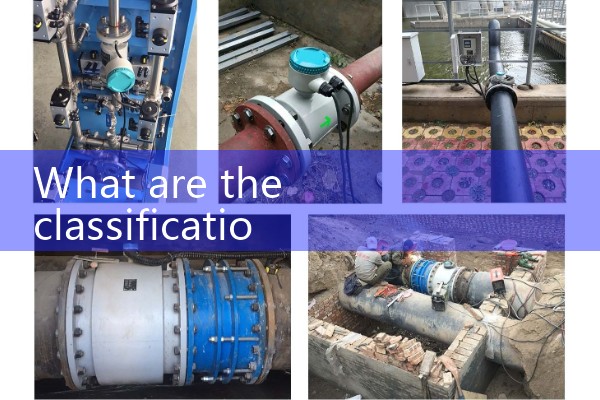
2. What are the classifications of flow meters? Classification and selection of flow meters
What are the classifications of flow meters? Introduction to the classification and selection of flow meters: In industrial production and process control, flow meters are a very important instrument and equipment used to measure the flow rate of liquids, gases, or vapors. The classification and selection of flow meters are crucial for the correct selection and application of flow meters. This article will introduce the classification and selection of flow meters, helping readers better understand the types of flow meters and choose the flow meter that suits their needs.
1. Classification by measurement principle 1 Mechanical flowmeter: A mechanical flowmeter determines the flow rate by measuring the volume or mass of fluid passing through a pipeline. Common mechanical flow meters include volumetric flow meters, turbine flow meters, and liquid mass flow meters, etc.
2. Dynamic flow meters: Dynamic flow meters calculate flow rates by measuring the velocity and pressure of fluids in pipelines.
. Common dynamic flow meters include porous plate flow meters, nozzle flow meters, and orifice plate flow meters, etc.3. Thermal flow meters: Thermal flow meters calculate flow rates by measuring the cooling effect of fluids on sensors.
. Common thermal flow meters include thermistor flow meters and thermocouple flow meters, etc.4. Mass flow meters: Mass flow meters calculate flow rates by measuring the mass of a fluid. Common mass flow meters include mass flow meters and thermal mass flow meters.
2. Classification
 Hot Blog
 Related AD