

『Flow Meter Group Controls: Managing Multi-Stream Chemical Injection Piping Networks』Related information(clamp on meter|electromagnetic meter|venturi meterrotameter|orifice meter|ultrasonic flow meter|mass flow meter|coriolis mass flow meter|coriolis flow meter|magnetic flow meter|magmeter flow meter|magflow flow meter|mag meter flow meter|electromagnetic flow meter|vortex flow meter|turbine flow meter|thermal mass flow meter|thermal flow meter|rotameter flow meter)
Flow Meter Group Controls: Managing Multi-Stream Chemical Injection Piping Networks
Quick Answer: Flow meter group controls let you monitor and balance several chemical injection lines from one point. For most multi-stream chemical injection systems in oil and gas, water treatment, and chemical dosing, Coriolis mass flow meters from Silver Automation Instruments provide direct mass flow, no moving parts, and 4-20 mA HART output for PLC or DCS integration. Send us your pressure in bar, temperature in °C, pipe size in DN, and flow range for each stream, and we will propose a flow meter group that fits the piping network.
A multi-stream chemical injection network is common in gas fields, water plants, and chemical dosing skids. One skid may hold 4 to 12 injection lines. Each line carries a different chemical such as corrosion inhibitor, scale inhibitor, methanol, oxygen scavenger, biocide, or coagulant. Pipe sizes often run from DN8 to DN25. Flow rates range from 0.2 kg/h to 200 kg/h depending on the line. Pressures can sit between 2 bar and 40 bar. Temperatures may reach 60 °C. These lines move chemical from storage tanks to injection quills on main process pipes or wellheads.
Why Flow Meter Group Controls Matter
You do not want each flow meter working alone. Group control means one display or one PLC screen collects flow data from all streams. Operators can see total chemical usage per hour or per day. This matters for dosing accuracy, inventory tracking, and safe operation. In oil fields in Oman or water plants in Chile, technicians need to adjust dosing without walking to each meter. A flow meter group control panel handles that.
Many plants still use rotameters for chemical injection. That works only if the process is stable. In practice, chemical viscosity changes with temperature, pumps wear, and back pressure shifts. A rotameter then shows a reading that is not accurate enough for audit or safety. A digital flow meter group records actual mass flow, total flow, and alarm states. That is the difference between estimated dosing and measured dosing.
Flow Meter Options for Chemical Injection Lines
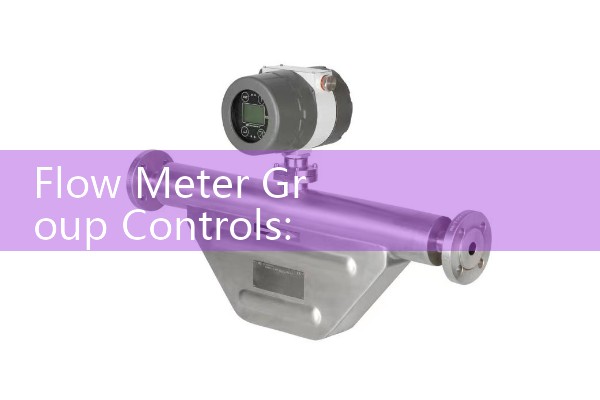
Coriolis mass flow meters are the first choice for most low flow liquid chemicals. They read mass directly, so viscosity and conductivity do not change the reading. They work with methanol, corrosion inhibitors, polymers, and oil-based additives. We supply inline models from DN3 to DN50. For very low flow, the meter tube size should match the injection rate. A DN3 Coriolis meter can handle 0.1 kg/h to 30 kg/h in many cases.
Oval gear flow meters are a lower cost option for clean, non-abrasive chemicals at low flow. They suit diesel or oil-based additives. The liquid must have some lubricity and should not contain solids. Electromagnetic flow meters work for water-based chemicals with conductivity above 5 µS/cm. They do not work for methanol, diesel, or oil-based inhibitors. Thermal mass flow meters suit gas injection lines such as chlorine gas or ammonia gas in water treatment.
Key Parameters We Ask From Customers
Here is the thing. Most engineers skip the full fluid data and only send flow range and pipe size. That is not enough. A chemical with viscosity 200 cP behaves differently in an oval gear meter than water at 1 cP. A line with 40 bar back pressure can cause gas bubbles if the injection point is not designed correctly.
For each stream we need pressure in bar, temperature in °C, pipe size in DN, flow range, chemical name, viscosity in cP, and conductivity in µS/cm if known. Also include hazardous area classification if the skid operates in ATEX Zone 1 or Zone 2. This data lets us confirm meter type, tube size, wetted material, and process connection.
A Real Installation Example in Vietnam
Last year a customer in Vietnam asked us for a flow meter group on a water treatment plant. The system had three injection lines: sodium hypochlorite, citric acid, and antiscalant. Pipe sizes were DN10, DN10, and DN15. Flow rates were 1 to 12 kg/h for sodium hypochlorite, 0.5 to 8 kg/h for citric acid, and 2 to 20 kg/h for antiscalant. Pressure was 6 bar, temperature 28 °C. We supplied three Coriolis mass flow meters with local display and 4-20 mA HART output. The customer wired all three meters into a small PLC. In the first two months, chemical waste dropped by 18 percent because operators could see exact dosing every shift.
We have seen similar results on offshore platforms in Southeast Asia and gas fields in Western Australia. These sites often use flow meter groups for methanol injection into wellhead flowlines. A chemical plant in Saudi Arabia manages polymer dosing with Coriolis meters. A desalination plant in Chile controls antiscalant and sodium bisulfite injection lines with the same group control approach.
Common Installation Mistakes
Back pressure too low causes air bubbles and unstable readings. A pulsating diaphragm pump without a dampener can produce false flow readings on a Coriolis meter even when the line is off. Not enough straight run after a partially closed valve creates swirl and measurement noise. Use a back pressure valve set at least 1 bar above the injection point pressure. Add a pulsation dampener if the pump is a simple diaphragm type. Install the flow meter in a location that allows stable flow and easy access for calibration.
FAQ: Five Questions We Get About Flow Meter Group Controls
What is a flow meter group control in chemical injection?
It is a set of flow meters mounted on separate chemical lines, wired to one control point or local display. Each meter reports flow rate and totalized flow, so operators can monitor multiple streams without standing at each pipe.
Which flow meter works best for low flow chemical injection?
A Coriolis mass flow meter is the best choice for most low flow liquid chemicals. It reads mass directly, works with non-conductive fluids, and handles viscosity changes. For very low flow, choose a model with small tube diameter, often DN3 to DN10.
Can I use an electromagnetic flow meter for all chemical injection lines?
No. Electromagnetic flow meters need a conductive liquid, usually above 5 µS/cm. They will not work for methanol, diesel, or oil-based inhibitors. Use them only for water-based chemicals like sodium hypochlorite, ferric chloride, or sodium hydroxide.
What information do you need for pricing a flow meter group?
Send us the pressure in bar, temperature in °C, pipe size in DN, flow range for each line, chemical name, viscosity in cP, and hazardous area classification if any. The more details you provide, the more accurate the quote.
Can you supply flow meter groups for ATEX Zone 1 chemical injection skids?
Yes. Silver Automation Instruments supplies flow meters with ATEX Zone 1 and Zone 2 approvals, IECEx, and local display options. Many of these meters operate on offshore platforms and in petrochemical plants.
Contact Silver Instruments for Your Flow Meter Group Quote
Send us your pressure (bar), temperature (°C), pipe size (DN), and flow range for each chemical injection stream. Our engineers will reply with a flow meter group proposal and price. You can reach Silver Automation Instruments by Tel +86-25-68650347, Whatsapp +86-25-52155837, or WeChat +86 15365082610. We serve customers in Southeast Asia, Oceania, Latin America, Africa, and the Middle East.
 Hot Blog
 Related AD